Every time a plane lands at OR Tambo, Cape Town International, or King Shaka, a team on the ground swings into action. The aircraft needs to be parked, the passengers need to be processed, the bags need to come off, cargo needs to be moved, the cabin needs to be cleaned, fuel needs to go in, and the plane needs to be turned around for its next flight. All of this happens within a tight window, sometimes as short as 45 minutes for a domestic turnaround. The people who make this happen work in ground handling, and it is one of the largest employment areas in the aviation industry.
What Ground Handling Actually Covers
Ground handling is a broad term that covers almost everything that happens to an aircraft and its passengers between landing and the next takeoff. The work splits into two main areas: airside operations and landside operations.
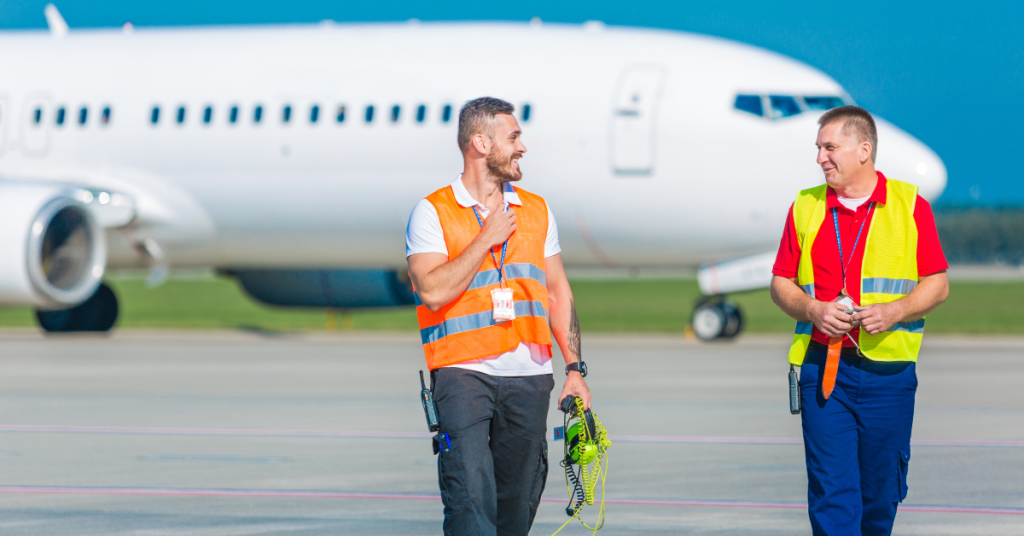
Airside operations take place on the ramp and around the aircraft. This includes marshalling the plane into its parking position, operating the jet bridge or mobile stairs, loading and unloading baggage and cargo, refuelling, de-icing (less common in South Africa, but part of the training for international work), pushing the aircraft back from the gate, and conducting ramp safety checks. Airside workers operate heavy ground support equipment like tugs, belt loaders, container dollies, and ground power units.
Landside operations cover the passenger-facing side. Check-in counter staff, boarding gate agents, arrival hall assistants, and lost baggage desk personnel all fall under ground handling. These are the people who process travel documents, assign seats, manage boarding, handle delayed or disrupted passengers, and deal with the inevitable luggage issues that come with air travel.
Both sides of the operation run on strict timelines. A delayed turnaround ripples through the entire schedule, affecting connecting flights, crew rosters, and gate allocations across the airport. Speed, accuracy, and communication between teams are what keep things running on time.
Why Training Is Required
Airport operations are heavily regulated. The South African Civil Aviation Authority (SACAA) and the Airports Company South Africa (ACSA) set standards for how ground handling activities are conducted. Workers need to understand aviation safety rules, dangerous goods regulations, security protocols, and equipment operation procedures before they are allowed on an airport ramp.
An airport handling course provides this foundation. The training covers the knowledge and practical skills needed to work safely and effectively in an airport environment. Without it, candidates are not eligible for most ground handling positions, as airlines and ground service providers require proof of relevant training before hiring.
For anyone serious about working in aviation but not interested in becoming a pilot or flight attendant, ground handling offers a direct entry point. The work is hands-on, the demand for trained staff is consistent, and the skills transfer across airports and countries.
What a Ground Handling Course Covers
A good ground handling course covers both the theory and practical elements of airport operations. The typical syllabus includes the following areas.
Airport familiarisation. Understanding the layout and operations of an airport, including terminals, aprons, taxiways, runways, and restricted areas. Students learn how different departments interact and how the flow of passengers, baggage, and aircraft is managed.
Ramp safety. Working around aircraft is dangerous. Jet engines, propellers, moving vehicles, heavy equipment, and fuel all create hazards. Training covers safe movement on the ramp, the use of personal protective equipment, hazard identification, and emergency response procedures. This is one of the most critical modules, as ramp incidents can cause serious injury or death.
Passenger handling. Check-in procedures, travel document verification, boarding processes, and managing passengers with special needs (unaccompanied minors, passengers with reduced mobility, medical cases). Students learn to use departure control systems and handle common passenger service scenarios.
Baggage and cargo handling. How baggage is sorted, loaded, and tracked. Cargo acceptance procedures, weight and balance calculations, and the handling of special items like live animals, perishable goods, and oversized baggage. Understanding the baggage reconciliation system, which links every checked bag to a boarded passenger, is a safety requirement.
Dangerous goods awareness. Certain items are restricted or prohibited from air transport. Training covers the IATA Dangerous Goods Regulations, how to identify restricted items, and what to do if dangerous goods are found in baggage or cargo. This knowledge is mandatory for anyone involved in loading, unloading, or processing shipments.
Load control and weight and balance. Every flight has weight limits, and the distribution of weight across the aircraft affects its handling in the air. Ground handling staff involved in load planning need to understand how passenger numbers, baggage weight, cargo, and fuel interact. Errors in this area have safety implications.
Communication and coordination. Ground handling involves constant communication between ramp agents, gate agents, flight crew, air traffic control, and operations centres. Training covers standard aviation communication practices, radio use, and the coordination required during normal operations and irregular situations like delays, diversions, and cancellations.
How Long the Training Takes
Ground operations course programmes in South Africa typically run between four weeks and three months, depending on the institution and whether the programme is full-time or part-time. Shorter intensive courses focus on the core modules and aim to get students work-ready quickly. Longer programmes may include additional specialisations like cargo operations, VIP handling, or ramp supervision.
Some training providers include practical work experience as part of the programme, either through partnerships with ground handling companies or through simulated airport environments. Practical exposure is a big advantage when applying for jobs, as employers value candidates who have hands-on experience alongside their theoretical knowledge.
Where Ground Handling Staff Work
The obvious answer is airports, and in South Africa, the biggest employers are at OR Tambo International (Johannesburg), Cape Town International, and King Shaka International (Durban). Smaller airports like Lanseria, George, East London, and Port Elizabeth (now Gqeberha) have ground handling operations too, though on a smaller scale.
Ground handling services at South African airports are provided by a mix of airline in-house teams and independent ground service providers. Airlines like the major domestic and international carriers operating in South Africa often contract third-party companies to handle their ground operations. These companies are some of the biggest employers in the airport ecosystem, and they are regularly looking for trained staff.
Opportunities are not limited to South Africa. Aircraft ground handling training that meets international standards is recognised at airports worldwide. Ground handling procedures follow IATA and ICAO standards, which means the skills are portable. South Africans who train locally have found work at airports across Africa, the Middle East, Europe, and Asia.
What the Job Pays
Entry-level ground handling positions in South Africa pay between R8,000 and R15,000 per month, depending on the employer, the airport, and the specific role. Passenger-facing roles like check-in agents and gate agents tend to sit at the higher end of that range. Ramp agents and baggage handlers start at the lower end but can progress through experience and additional certifications.
Supervisory roles pay more, with ramp supervisors and duty managers earning R18,000 to R30,000 per month. Specialised positions in load control, cargo operations, and training departments command higher salaries.
Shift work is standard. Airports operate 24 hours a day, seven days a week, and ground handling staff work rotating shifts that include early mornings, late nights, weekends, and public holidays. Shift allowances and overtime pay add to the base salary.
Benefits typically include medical aid contributions, provident fund, and discounted or staff-rate flights on certain airlines. The flight benefits are a genuine perk for people who enjoy travelling.
Getting Started
For anyone looking at an airport ground handling course in South Africa, the entry requirements are straightforward. A matric certificate is the baseline. English proficiency is required, and additional languages are an advantage at international airports. A clean criminal record is mandatory, as all airport workers undergo security vetting. Physical fitness matters for ramp-side roles, which involve lifting, bending, and working outdoors in all weather conditions.
Choosing a training provider that is recognised by airlines and ground handling companies operating in South Africa makes a real difference when it comes to job placement. Ask about the course content, the qualifications of the instructors, and the employment track record of past graduates.
Ground handling is one of those fields that most travellers never think about, but without the people doing this work, no plane would leave the gate on time. For anyone who wants to work in aviation, enjoys a fast-paced environment, and does not mind shift work, it is a solid and accessible entry point into the industry.