Not everyone who works in aviation flies. Behind every flight that takes off and lands on time, there’s a ground team that made it happen. The check-in staff who process passengers and luggage. The ramp agents who load and unload the aircraft. The operations coordinators who manage gate assignments, turnaround times, and flight schedules. The customer service agents who handle delays, rebookings, and passenger queries. All of these roles fall under the broad umbrella of ground handling, and they’re the backbone of every airport operation.
An airport handling course is the qualification that opens the door to these roles. The course trains candidates in the procedures, systems, and skills needed to work in the ground operations side of the aviation industry. It covers everything from check-in and boarding procedures to baggage handling, load planning, and passenger assistance for travellers with special needs.
A ground handling course is practical and focused. The content is built around the real-world tasks that ground staff perform every day at airports across South Africa and internationally. Candidates learn how to use departure control systems, how to process travel documents, how to manage irregular operations like flight delays and cancellations, and how to communicate with flight crew and air traffic operations.
The ground operations course also covers safety and security procedures. Working on an airport apron is a high-risk environment. Aircraft, ground vehicles, jet engines, and heavy equipment all operate in close proximity, and the safety protocols are strict. Candidates learn how to work safely around aircraft, how to handle dangerous goods documentation, and how to comply with the security regulations that govern airport operations.
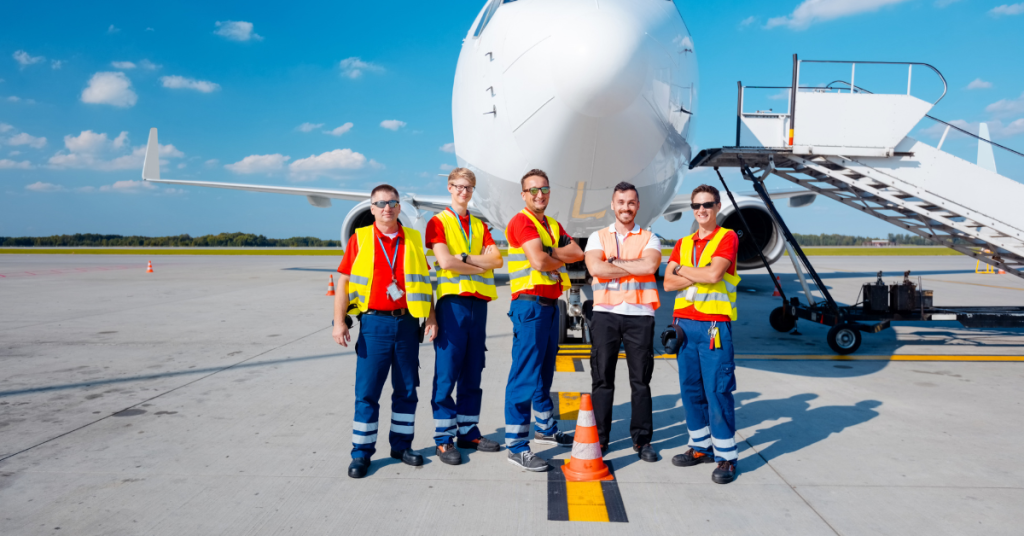
Aircraft ground handling training prepares candidates for the physical and operational realities of working on the ramp. This includes marshalling aircraft, operating ground support equipment like belt loaders and push-back tugs, and managing the turnaround process that gets an aircraft from arrival to departure in the shortest possible time. Airlines and ground handling companies measure turnaround times in minutes, and efficiency on the ramp directly affects an airline’s on-time performance and profitability.
An airport ground handling course in South Africa qualifies graduates for positions at OR Tambo, Cape Town International, King Shaka, and regional airports across the country. The qualification is also recognised internationally, which means graduates can apply for ground handling positions at airports in the Middle East, Europe, and other regions where South African aviation qualifications are accepted.
The Job Market
South Africa’s aviation sector has been growing steadily, with increasing passenger numbers and new routes being added by both domestic and international carriers. This growth drives demand for ground handling staff at every level. Entry-level positions in check-in, boarding, and ramp operations are available at all major airports, and there’s a clear path for advancement into supervisory, management, and specialised roles for people who perform well and gain experience.
The work is shift-based, which means early mornings, late nights, weekends, and public holidays are part of the deal. Airports operate 24 hours a day, 365 days a year, and the ground teams work around the clock to keep operations running. For people who prefer non-traditional working hours and who enjoy the fast-paced airport environment, it’s a rewarding career that offers stability and growth.
What Skills You Actually Build
A ground handling course does more than just teach procedures. It builds a practical skill set that applies across multiple roles within aviation. Candidates develop strong communication skills, especially in high-pressure environments where clear and concise instructions are critical. They learn how to work as part of a coordinated team, where timing and accuracy directly affect flight operations.
Attention to detail is another key skill. A small mistake in passenger processing, baggage handling, or load planning can cause delays or safety issues. The training reinforces the importance of precision, accountability, and following standard operating procedures at all times. These are habits that employers value and that carry through into long-term career growth.
Problem solving is also a big part of the role. Flights get delayed, passengers miss connections, baggage goes missing, and weather disrupts schedules. Ground staff are trained to handle these situations calmly and efficiently while maintaining a professional approach with passengers and crew.
Career Progression in Ground Handling
Starting in an entry-level role does not mean staying there. Ground handling offers clear progression paths for those who perform well and build experience. A check-in agent can move into a supervisory role. A ramp agent can progress to ramp supervisor or turnaround coordinator. Operations roles can lead to positions in airline control centres or airport management.
With time, experience, and additional training, ground staff can specialise in areas like load control, dangerous goods handling, or flight operations coordination. These roles come with increased responsibility and better earning potential. For those who stay in the industry long term, aviation offers structured career growth that is based on performance and reliability.
The Reality of the Work Environment
Working in ground handling is not a desk job. It is active, fast-paced, and often physically demanding. Ramp roles require being outdoors in all weather conditions, from early morning shifts to late-night operations. Even customer-facing roles like check-in and boarding can be high pressure, especially during peak travel periods.
However, for many people, this is exactly what makes the job appealing. No two days are the same. Each shift brings different flights, different passengers, and different challenges. The environment keeps you engaged and constantly learning.
Why Airlines Value Ground Handling Experience
Ground handling experience is highly respected within the aviation industry. It provides a deep understanding of how airports operate and how different teams work together to keep flights moving. This knowledge is valuable not only for ground roles but also for other areas of aviation.
Many professionals who start in ground handling go on to build careers in airline operations, cabin crew, or even aviation management. The exposure to real-world operations gives them a strong foundation that sets them apart from candidates without practical experience.
Is This the Right Career Path for You
Ground handling is suited to people who are reliable, adaptable, and comfortable working in a structured environment. It requires discipline, teamwork, and the ability to handle pressure without losing focus. For those who enjoy working around aircraft, being part of a team, and playing a direct role in keeping flights on schedule, it can be a highly rewarding career.
It is also one of the most accessible entry points into aviation. Unlike pilot training or certain technical roles, a ground handling course is relatively short and focused, making it a practical option for those looking to enter the industry without years of study.
Final Thoughts
Working at the airport without flying still puts you at the centre of the aviation industry. Ground handling roles are essential, and the people who do them are the reason flights depart safely and on time. With the right training, a strong work ethic, and a willingness to learn, this path can lead to a stable and growing career in one of the most dynamic industries in the world.