Anyone who has spent time in a hospital, clinic, or treatment centre knows that the experience of being a patient or a caregiver is shaped by more than just the medical care itself. The environment matters. The comfort of the space matters. And one of the most overlooked elements in that environment is the seating.
In Canadian healthcare facilities, where patients may spend hours in a chair during chemotherapy infusions, dialysis treatments, post-operative recovery, or long-term care, the quality of that chair has a direct impact on patient wellbeing. It’s not a minor detail. It’s something that affects how people feel during some of the most difficult periods of their lives.
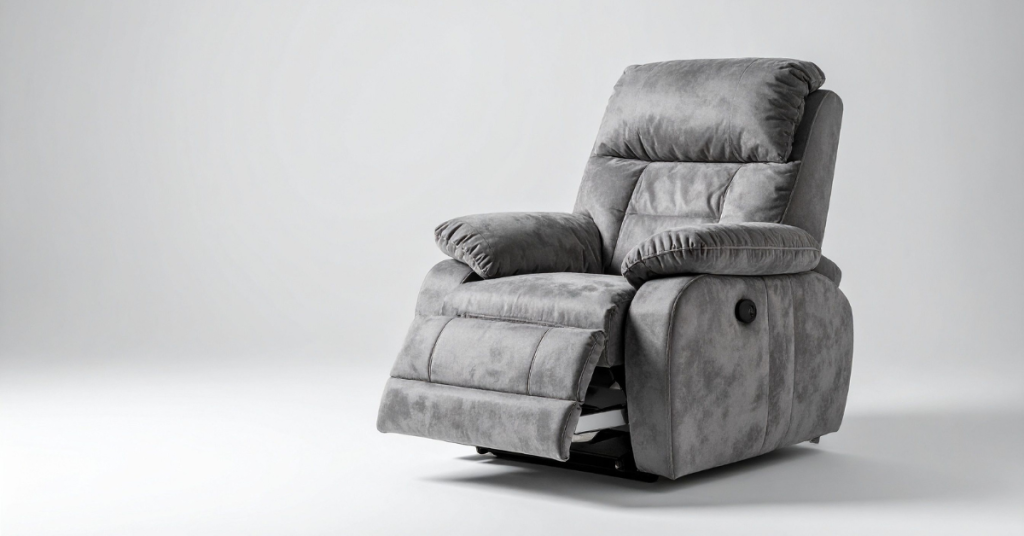
The Difference Between Standard Chairs and Medical Grade Seating
Not all chairs belong in a clinical environment. A standard office chair or a residential recliner might be comfortable enough at home, but it won’t hold up to the demands of a healthcare setting, and it won’t meet the functional requirements that clinical staff need to do their jobs properly.
Medical recliners are built to a different standard. The materials are chosen for infection control, with surfaces that can be wiped down with clinical-grade cleaning products without cracking, peeling, or degrading over time. The mechanisms are designed for repeated daily use, not occasional home use. The weight ratings are typically higher to accommodate a full range of patients. And the adjustability is broader, allowing clinical staff to position patients correctly for different procedures or recovery stages.
A standard chair that looks similar on the surface will almost always fail on one or more of these points within a relatively short time in a clinical setting.
Where Medical Seating Gets Used
Hospital chairs appear across a wide range of clinical environments in Canada, each with slightly different requirements.
Oncology and chemotherapy units are probably the most common setting where specialised seating is used. Patients receiving infusions may be seated for three to six hours at a stretch. Comfort over that duration requires proper lumbar support, adjustable leg rests, and the ability to recline to a position that takes pressure off the lower back and hips. Staff need to be able to adjust the chair without asking the patient to move, and IV access to the arm needs to remain straightforward regardless of chair position.
Dialysis centres have similar requirements. Dialysis sessions typically run for three to four hours, three times a week for many patients. Over months and years of treatment, the seating a patient uses becomes a significant part of their quality of life. A chair that’s uncomfortable for one session is painful over hundreds of sessions.
Post-operative recovery wards use seating to support patients who are being encouraged to sit up and mobilise after surgery, without being ready to stand or walk independently. The chair needs to support safe transfers, which means appropriate seat height and armrests that a patient can push up from without the chair tipping or sliding.
Long-term care and aged care facilities use medical seating throughout common areas, therapy rooms, and patient rooms. Here the needs of patients who may have limited mobility, fragile skin, or significant pain conditions require chairs that can be adjusted to exactly the right position for each individual.
What to Look for in Hospital Recliners
Hospital recliners vary considerably in what they offer. Understanding the key features helps procurement teams make better decisions for their specific setting.
Upholstery: The covering needs to be seamless or have minimal seams, since seams harbour bacteria and are harder to clean thoroughly. It needs to be resistant to the cleaning agents used in clinical environments, including alcohol-based wipes and stronger disinfectants. Vinyl and medical-grade polyurethane are the most common materials for this reason, though higher-end options can feel softer while still meeting infection control standards.
Mechanism and adjustability: A quality hospital recliner chair should offer smooth adjustment through multiple positions, from upright through various recline angles to a near-flat position for patients who need to lie down without being transferred to a bed. The mechanism should be operable by clinical staff with minimal effort and should be lockable at any angle.
Weight capacity: Medical populations include patients across the full range of body sizes. A chair rated only for average weights will be unsuitable for a portion of the patient population and creates safety risks. Look for chairs with a weight capacity that covers the full range of patients likely to be using the facility.
Ease of cleaning: Removable cushion covers, smooth surfaces without crevices, and materials that dry quickly after cleaning all reduce the time cleaning staff spend per chair and lower the risk of cross-contamination.
Mobility: Many hospital armchairs are fitted with castors to allow them to be repositioned without being lifted. Lockable castors prevent movement once the chair is positioned correctly. For facilities that need to reconfigure spaces frequently, mobility is a practical advantage.
The Patient Experience Perspective
It’s easy to approach the procurement of chairs for hospital settings as a purely functional exercise. Weight ratings, infection control, mechanism durability. These things matter, but they’re not the whole picture.
Consider what it feels like to sit in an uncomfortable chair for four hours while receiving treatment. The back pain that starts around the two-hour mark. The way a poorly positioned footrest causes pressure behind the knees. The inability to shift position because the recline mechanism is stiff or the armrests are in the wrong place. None of these things affect the medical outcome of the treatment, but they absolutely affect how a patient experiences their care.
Canadian healthcare facilities have increasingly recognised that patient experience is a meaningful measure of care quality. Patient satisfaction surveys regularly cite comfort and environment as factors in overall satisfaction scores. Seating, while seemingly minor compared to the clinical dimensions of care, is something patients notice and remember.
For treatment that’s repeated frequently, like dialysis or chemotherapy, the chair becomes almost synonymous with the treatment itself. Patients spend hundreds of hours in it. Getting that right has a real impact.
What Clinical Staff Need from Medical Seating
The needs of clinical staff are different from but related to those of patients. Medical recliner chairs that are difficult to adjust place unnecessary physical strain on nurses and healthcare aides who are repositioning patients multiple times per shift.
A chair that requires significant force to recline or to raise the leg rest will, over time, contribute to cumulative strain injuries in the staff using it. This is a real occupational health consideration in healthcare settings.
Staff also need to be able to access the patient from multiple sides. A chair that blocks access to the arm, for example, complicates IV line management. One that is too low makes it difficult to work with a patient without bending awkwardly. The best medical recliner designs account for staff ergonomics alongside patient comfort.
Buying for Longevity
Medical seating is a procurement decision that should be made with total cost of ownership in mind, not just the upfront price. A lower-cost chair that requires replacement after two years in a clinical setting will cost more over five years than a higher-quality chair that lasts the full five years and beyond.
Warranty coverage matters. Reputable suppliers offer meaningful warranty periods on both the frame and the mechanism, because they build chairs with the confidence that they’ll hold up. Short warranties or warranties with numerous exclusions are worth treating with caution.
Replacement parts availability is worth asking about. In a busy facility, a chair that’s out of service because a part can’t be sourced for weeks represents a real operational problem. Suppliers who maintain parts inventory and can turn around repairs quickly reduce downtime.
Serviceability also matters. A chair whose mechanism can be serviced and repaired without requiring full replacement of the unit is a better long-term investment than one where any mechanical fault requires a full replacement.
The right seating in a healthcare environment is one of those things that fades into the background when it’s done correctly. Patients are comfortable, staff can work efficiently, and the space is clean and functional. When it’s done poorly, it’s felt every single day, by every person who sits in it.