Eye injuries at work happen faster than most people expect. A splash of cleaning fluid, a spray of metal shavings, a mist of chemical vapour at the wrong moment, and someone is standing there with a substance in their eye that needs to come out immediately. The difference between a minor incident and a permanent injury often comes down to what happens in the first ten seconds.
That is not an exaggeration. The eyes are extremely sensitive, and certain chemicals begin causing damage almost on contact. Waiting for someone to fetch a first aid kit, or walking to a bathroom sink on the other side of the building, is not a realistic response when something corrosive has entered the eye. The response needs to be immediate, and the equipment to make that response possible needs to be right there.
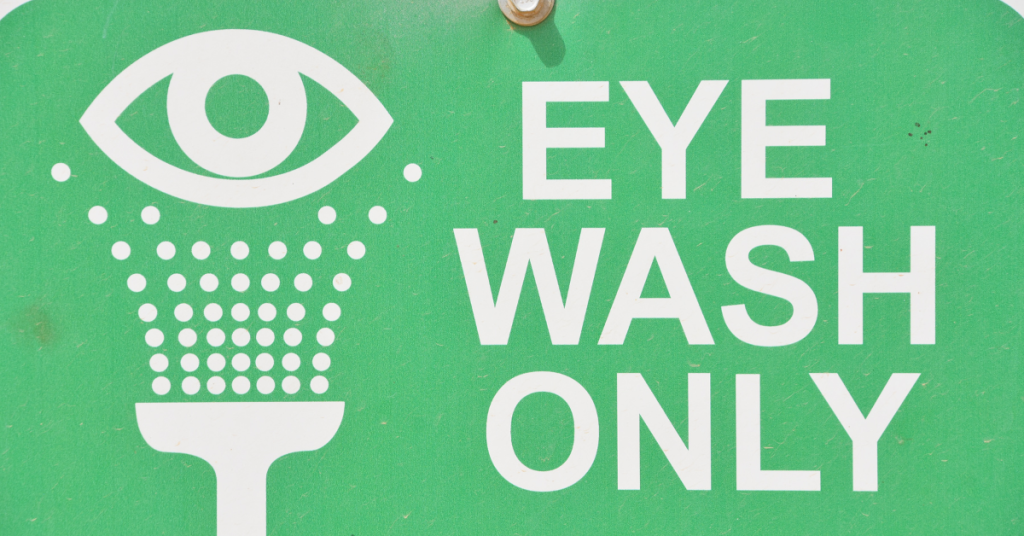
What the Research and Safety Standards Say
Occupational health and safety standards in South Africa, as well as internationally recognised guidelines, are consistent on this point. Workplaces where employees are exposed to hazardous substances, chemicals, or materials that could injure the eyes are required to have appropriate first aid facilities in place. Eye flushing equipment is specifically mentioned in most hazardous chemical handling guidelines.
The American National Standards Institute (ANSI) standard for emergency eyewash and shower equipment, which is referenced widely in industrial safety practice globally, states that an eyewash facility should be reachable within ten seconds of the hazard. That works out to roughly ten metres in a typical workplace setting. The logic is simple: ten seconds is about as long as someone can reasonably keep their eyes closed while moving toward the equipment.
If the equipment is further away than that, the standard is not being met, and the risk of a serious injury increases accordingly.
Where Eye Wash Stations Are Needed
The most obvious locations are workplaces that handle acids, alkalis, solvents, or other corrosive chemicals. Battery workshops, chemical manufacturing, laboratories, cleaning product facilities, and agricultural chemical stores all fall clearly into this category.
What gets overlooked is the broader range of workplaces where the risk is present but less obvious and makes eye wash stations a necessity. Metal fabrication shops produce fine particles and metal dust that can get into the eyes during grinding, cutting, or welding. Spray painting environments expose workers to solvent-based products. Cleaning staff in commercial and industrial settings often work with concentrated cleaning agents. Construction workers may be exposed to cement, lime, and adhesives, all of which can cause serious eye irritation or damage on contact.
Any workplace where a substance is being handled that carries a hazard warning related to eye contact needs to assess whether eye flushing equipment is in place. Checking the safety data sheet for each chemical used on the site will confirm the specific risks involved.
How an Eye Wash Station Works
An eye wash station delivers a controlled, gentle flow of clean water or a sterile saline solution to both eyes simultaneously. The flow rate is designed to flush the eye thoroughly without causing additional injury through pressure or impact.
The user activates the station, usually by pushing a lever or turning a valve with their hands, and then leans over the unit and holds their eyes open in the flowing water. The flushing should continue for a minimum of fifteen minutes for most chemical exposures, and longer for strongly alkaline substances, which continue to penetrate tissue even after initial flushing begins.
This is an important point that many people are not aware of. The instinct is to flush briefly and then seek further treatment. For chemical exposures, particularly alkalis like lime, cement, and drain cleaners, brief flushing is not sufficient. The substance continues to react with the tissue of the eye even after it appears to have been rinsed away. Extended flushing is necessary to dilute and remove the substance thoroughly.
The Main Types Available
Plumbed units are permanently connected to a water supply and deliver a continuous flow of water for as long as needed. These are the most reliable option for high-risk environments where chemical exposure is a regular possibility. They require installation near the work area and need to be tested regularly to confirm the water flow rate and temperature are within the correct range.
Self-contained or portable units are sealed tanks that hold a supply of sterile saline solution. They do not require plumbing and can be placed anywhere on a site. They are useful for locations that are too far from a plumbing point, for outdoor sites, or as supplementary units in areas of higher risk. The limitation is that the solution volume is fixed and the unit needs to be replaced or refilled once the supply is used.
Combination units pair eye washing capability with a full body safety shower on the same unit. These are appropriate in environments where a larger chemical splash or full body exposure is a possibility, such as areas where large volumes of chemicals are mixed or transferred.
Personal eyewash bottles are a portable first response option. They are small enough to be kept in a toolbox or first aid kit and provide enough solution for immediate initial flushing before the person moves to a full station. They are not a substitute for a full unit, but they are useful as a first response measure where the full station is not within immediate reach.
Placement and Access
Getting the location right is as important as having the equipment at all. The unit needs to be:
Within ten seconds of travel from any area where a chemical exposure could occur. On a clear, unobstructed path that can be reached even by someone with their eyes closed or partially closed. Well lit, with clear signage marking its location. Free from being blocked by equipment, pallets, or storage that gets shifted around the site.
In practice, this means that a single unit positioned in a central location is often not enough. Larger facilities or sites with multiple hazardous work areas typically need units at several points to meet the ten-second access requirement throughout the site.
Testing and Maintenance
A unit that has not been tested recently may not work correctly when needed. Plumbed stations should be activated weekly to flush the supply line and confirm the unit is functioning. Standing water in supply lines can develop bacterial contamination over time, and a brief weekly flush addresses this.
Self-contained units should be checked to confirm the solution is within its expiry date. Sterile saline solution does not last indefinitely, and an expired unit may not be safe for eye flushing.
Signage should be checked periodically to confirm it is visible and undamaged. Units should be inspected for damage to nozzles, covers, and activation mechanisms. A maintenance log recording each inspection date and any issues found is a straightforward way to stay on top of this.
Training Staff
Having the equipment in place only gets a business partway there. Staff need to know where the units are located, how to activate them, and how long to flush for. This is not complex training, but it needs to happen before an incident occurs rather than after.
A short walk-through at induction for new staff, with periodic refreshers, is sufficient for most workplaces. The key points to cover are: where the units are, how to activate them without being able to see clearly, how long to flush, and when to call for emergency medical assistance.
The instinct to stop flushing before fifteen minutes is strong. Keeping the eyes open in flowing water is uncomfortable, and most people feel that a minute or two should be enough. Reinforcing the actual time requirement during training makes it more likely that staff will follow through correctly in a real situation.
Getting It Right from the Start
The cost of installing proper eye flushing equipment on a site is modest compared to the cost of a serious eye injury. Lost working time, medical treatment, potential permanent vision damage, and the legal and insurance consequences of a preventable workplace injury all far exceed the investment in the right equipment placed in the right locations.
South African workplaces are required under the Occupational Health and Safety Act to take reasonable steps to protect employees from foreseeable hazards. For any workplace handling chemicals or substances that carry an eye hazard, having appropriate flushing equipment available and maintained is part of that obligation.
Getting an assessment of the site done properly, identifying every location where the risk is present, and putting the right type of unit in the right place is the correct starting point. The maintenance and training follow from there.