Spills happen. It does not matter how careful a team is or how well a site is managed. A container gets knocked over, a pipe develops a leak, a vehicle starts dripping oil, or someone drops a chemical drum. These things happen in warehouses, workshops, factories, farms, and construction sites across South Africa every week.
The problem is not always the spill itself. The bigger problem is what happens in the minutes after it occurs. If the right equipment is not available immediately, a small spill becomes a much larger one. Liquid spreads across a floor, gets tracked through a building, runs toward a drain, or soaks into the ground. What could have been cleaned up in ten minutes turns into a half-day job with serious consequences.
Having spill kits on site and ready to use is one of the most practical safety decisions a business can make. It is not complicated equipment. It is not expensive relative to the cost of getting things wrong. It is just a prepared response waiting to be used when something goes wrong.
What a Spill Kit Actually Contains
A spill kit is a pre-packaged set of absorbent materials and containment tools designed to clean up a liquid spill quickly and safely. The contents vary depending on the type of spill it is designed for, but most kits include some combination of the following.
Absorbent pads are flat sheets that soak up liquid on contact. They are placed directly onto a spill and left to absorb the liquid before being picked up and disposed of. Absorbent socks or booms are longer tube-shaped materials used to surround a spill and stop it from spreading further. Loose absorbent granules can be spread across larger spills to soak up the liquid across a wider area.
Most kits also include personal protective equipment such as gloves and in some cases goggles or a disposable apron. A heavy-duty waste bag for disposing of contaminated materials is usually included too, along with cable ties or zip ties to seal the bag securely.
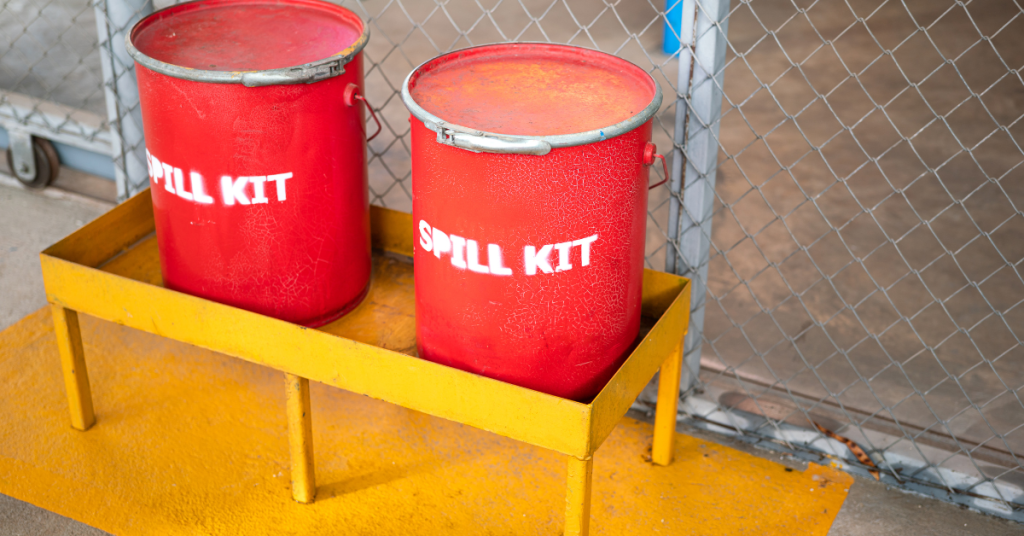
The container the kit comes in is worth paying attention to. A well-designed kit comes in a clearly labelled bag, bin, or drum that is easy to carry to the spill site quickly. The quicker a spill can be reached and contained, the less damage it causes.
The Different Types of Kits Available
Not all spills involve the same type of liquid, and not all absorbent materials work equally well on all liquids. There are three main categories of kits available, each suited to a different type of spill.
General purpose kits are designed for water-based liquids. They work well on coolant spills, water leaks, and similar non-hazardous liquid spills. These are commonly used in workshops, kitchens, and general commercial settings.
Oil and fuel kits are specifically designed for hydrocarbon-based liquids such as diesel, petrol, hydraulic fluid, and lubricants. The absorbent materials in these kits are hydrophobic, which means they repel water and absorb oil. This makes them effective when a spill occurs outdoors or near a drain where water may also be present.
Chemical kits are built for more hazardous spills. The materials used are designed to handle acids, bases, solvents, and other reactive chemicals safely. These kits are appropriate for laboratories, chemical storage areas, and manufacturing facilities that handle aggressive substances.
Choosing the right type of kit for the substances on a site is important. Using a general purpose kit on a chemical spill, for example, may not provide adequate protection for the person cleaning it up, and may not fully absorb the liquid.
Where Kits Should Be Kept
Placement matters as much as having the kit in the first place. A spillage kit stored in a back storeroom on the other side of a site is not going to be used effectively when a spill occurs near the loading bay. The first few seconds after a spill are the most important for limiting the spread of liquid, and that response time depends entirely on how close the kit is to where the spill happened.
Kits should be placed at or near any point where spills are most likely to occur. That includes storage areas for fuels, oils, or chemicals, near machinery that uses hydraulic fluid or coolant, close to vehicle maintenance areas, near loading and unloading points, and next to any tanks or containers that hold liquids.
In larger facilities, multiple kits at different locations across the site is a sensible approach. It removes the risk of a single kit being unavailable because it is already in use elsewhere or because the spill happens far from the central storage point.
Kits should also be clearly visible and easy to access. Bright labelling, a consistent storage location that all staff know about, and regular checks to confirm the kit is fully stocked all contribute to a faster, more effective response when something goes wrong.
Training Staff to Use Them Correctly
Having the equipment available is only part of the solution. Staff need to know how to use it. This does not require extensive training. A basic walkthrough of what is in the kit, when to use it, and how to dispose of contaminated materials correctly is sufficient for most workplaces.
A few things worth covering in any staff briefing:
Put on gloves before touching any spilled material. Even liquids that seem harmless can cause skin irritation or absorb through the skin with repeated exposure. Use absorbent socks to surround the spill first before placing pads directly on the liquid. This stops the spill from spreading while the absorbent material soaks it up. Dispose of all used materials in the waste bag provided and seal it properly. Do not put contaminated absorbents in general waste bins unless the substance is confirmed to be non-hazardous. Restock the kit immediately after use so it is ready for the next incident.
Compliance and Health and Safety Requirements
In South Africa, the Occupational Health and Safety Act places a responsibility on employers to provide a safe working environment and to have appropriate measures in place to manage hazards. Spill response equipment falls within this scope, particularly for businesses that store or handle oils, fuels, or chemicals.
Beyond the legal side of it, having proper spill response capability protects staff from exposure to hazardous substances, reduces the risk of slips and falls in the workplace, prevents contamination of drains and surrounding land, and reduces the cost of cleaning up spills that have been allowed to spread.
Environmental regulations in South Africa also place obligations on businesses when it comes to preventing pollution. A spill that reaches a storm water drain or enters the soil can result in significant fines and remediation costs. A well-placed and properly maintained spill response setup is a straightforward way to reduce that risk.
Keeping Kits Stocked and Ready
A spill kit that has been used and not restocked is no better than having no kit at all. After any incident where materials from a kit are used, those materials need to be replaced before the kit goes back into storage.
Most suppliers sell refill packs that match the contents of their standard kits. Keeping a small stock of replacement materials on site means restocking can happen immediately rather than waiting for a delivery.
Check kits periodically even when they have not been used. Absorbent materials that have been exposed to moisture or extreme temperatures may have degraded. The bag or container should be intact, the PPE should be present, and the waste bags should be undamaged. A quarterly check is a reasonable routine for most workplaces.
Having the right equipment, in the right place, in good condition, and with staff who know how to use it: that is all it takes to manage a spill effectively before it becomes a much larger problem.