Most people don’t think about chemical or liquid spills until one actually happens. And when it does, things can go sideways fast. A container tips over, a pipe starts leaking, or someone knocks a drum off a shelf. If no one knows what to do or where the cleanup equipment is, a small mess turns into a big problem.
That is exactly why having the right cleanup gear ready to go is so important. Whether the site handles oils, fuels, coolants, or chemical solutions, being prepared can mean the difference between a quick cleanup and a full-blown environmental incident.
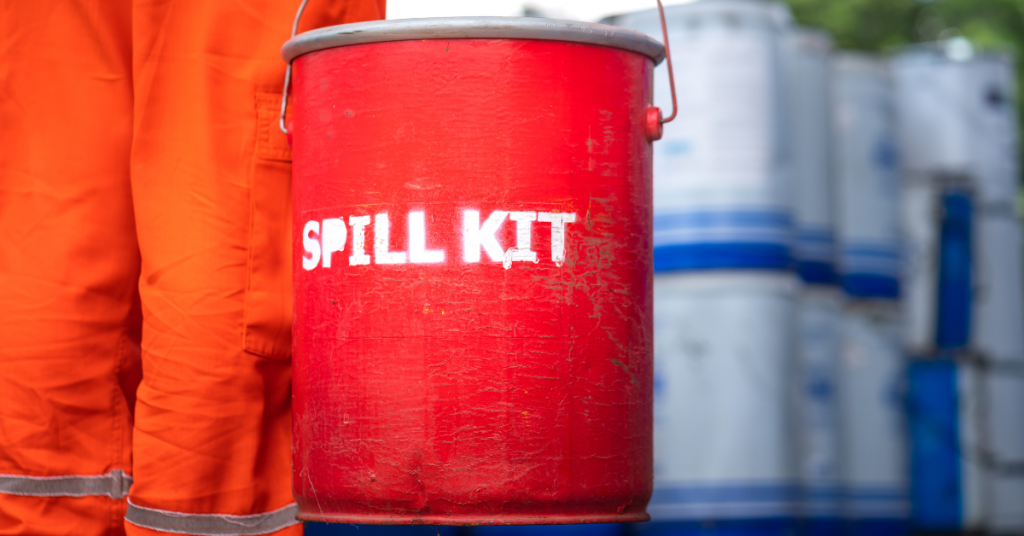
What Are Spill Kits and Why Do They Matter?
A spill kit is a collection of tools and absorbent materials packed together in a bag, bin, or drum. The idea is simple: when a spill happens, someone grabs the kit, opens it up, and uses what is inside to contain and clean up the mess before it spreads.
Inside a typical kit, you would find absorbent pads, socks or booms (which are long tube-shaped absorbents used to contain a spill), disposal bags, gloves, and sometimes goggles. The exact contents depend on the type of liquid the kit is designed for. Oil-only kits, for example, are made to absorb petroleum-based liquids while repelling water. Chemical kits handle a wider range of hazardous substances. General-purpose kits work on most non-aggressive liquids.
The reason these kits matter comes down to time. When a spill happens, the clock is ticking. The liquid is moving. It could reach a drain, seep into soil, or come into contact with workers. Having a pre-packed kit right there, ready to grab, shaves minutes off response time. And those minutes count.
Where Should These Kits Be Placed?
The placement of spill kits is something a lot of workplaces get wrong. Buying the kit is step one. Putting it somewhere useful is step two, and it gets overlooked more often than it should.
The best approach is to place kits as close as possible to the areas where spills are most likely. Think about storage rooms, loading docks, workshops, fuel dispensing stations, and any spot where chemicals or liquids get poured, mixed, or moved around. If workers have to walk across an entire facility to find the kit, the spill has already grown by the time they get back.
Wall-mounted cabinets, mobile carts, and clearly labelled bins all work well. The point is that everyone on site should know where the kits are. It does no good to have a perfectly stocked kit hiding behind boxes in a back room.
Picking the Right Kit for the Job
Not all spills are the same, and not all kits are designed for the same thing. Choosing the wrong type of spillage kit is a mistake that can actually make things worse, especially when dealing with hazardous chemicals.
There are three main categories to know about. Oil-only kits are white and are built to soak up hydrocarbons like diesel, petrol, hydraulic oil, and similar substances. They float on water, which makes them useful for outdoor spills near drains or waterways. General-purpose kits, usually grey, handle water-based and non-aggressive liquids. These are the all-rounders. Chemical kits, often yellow, are built to handle acids, bases, and other aggressive chemicals safely.
The key is matching the kit to the actual liquids present on site. A workshop that deals mostly with engine oil needs an oil-only kit. A warehouse storing a mix of cleaning agents and paints probably needs a chemical kit. Getting this right matters because using the wrong absorbent on certain chemicals can cause reactions, give off fumes, or simply fail to absorb the liquid at all.
Training Is Half the Battle
Having the gear is only half of it. Workers need to know how to use what is inside those kits. It sounds obvious, but plenty of workplaces buy kits, put them on a shelf, and never train anyone on how to open them up and use the contents properly.
Good training covers a few things. First, workers learn to size up the spill. Is it small enough to handle with a kit, or is it big enough that outside help is needed? Second, they learn how to use the absorbent materials. Pads go on top of the liquid. Socks and booms go around the edges to stop it from spreading. Third, they learn how to dispose of everything safely. Used absorbents that have soaked up hazardous liquids are considered hazardous waste themselves and need to be handled and disposed of correctly.
Running a quick training session once or twice a year keeps things fresh. It does not need to be complicated. Twenty minutes, a quick demo, and a few questions answered can make a real difference when something actually goes wrong.
Restocking After a Spill
Here is something that trips up a lot of sites: after a kit gets used, it needs to be restocked. This seems like common sense, but it gets forgotten more often than anyone would like to admit.
After every use, someone should check what was used from the kit and replace those items. Some suppliers sell refill packs specifically for this purpose, which makes it easy. The worst situation is having a second spill a week later and finding out the kit is empty because nobody refilled it after the first one.
Setting up a simple checklist helps. After each spill response, run through the kit contents, tick off what is missing, and order replacements straight away. Some workplaces assign this responsibility to a specific person, like a safety officer or shift supervisor, to make sure it actually gets done.
Legal Requirements Worth Knowing
In South Africa, workplace health and safety laws require employers to have plans and equipment in place for dealing with spills, particularly when hazardous substances are involved. The Occupational Health and Safety Act and environmental legislation like the National Environmental Management Act both apply.
Failing to have proper spill response measures can lead to fines, legal action, and cleanup costs that far exceed what the kit itself would have cost. There have been real cases where businesses faced serious penalties for spills that reached storm water drains or natural water sources.
Getting a few kits and training the team is a small investment compared to the cost of a cleanup order or a fine.
A Few Practical Tips
Some things that experienced safety teams already know but newer workplaces might not: keep kits out of direct sunlight, because UV exposure can degrade absorbent materials over time. Check the kits regularly, even if they have not been used. Absorbent pads can sometimes compress or lose their ability to soak up liquid if they are stored in damp conditions.
Label everything clearly. Put up signage showing where the kits are, and include spill response steps on the wall near the kit location. The less thinking someone has to do during a spill, the better. A laminated instruction card attached to the kit itself can speed things up significantly.
For outdoor areas, make sure kits are stored in weatherproof containers. Rain getting into a kit and soaking the absorbents before they are needed defeats the whole purpose.
It Comes Down to Being Ready
Spills are going to happen. That is just the reality of working with liquids, chemicals, and industrial materials. The difference between a workplace that handles spills well and one that does not comes down to preparation.
Having the right kit in the right place, training the people who might need to use it, and keeping everything stocked and maintained is straightforward. But skipping any of those steps creates gaps, and spills have a way of finding those gaps at the worst possible time.