Property investment in South Africa has created more millionaires than almost any other asset class. That’s not a bold claim. It’s a fact that plays out in the net worth statements of ordinary South Africans who bought property at the right time, held it, and let the combination of capital growth and rental income do the work over 10, 15, and 20-year periods. Property doesn’t require a finance degree or a trading account. It requires a deposit (or a 100% bond for qualifying buyers), a bit of patience, and the discipline to hold through the inevitable ups and downs of the market.
The basic maths behind property investments is straightforward. Buy an asset using mostly the bank’s money through the bond. Have a tenant pay most or all of the monthly bond repayment through rent. Watch the property appreciate in value over time while the bond balance decreases. After a set period, the property is worth significantly more than what was paid for it, the bond is either paid off or substantially reduced, and the owner has a valuable asset that generates passive income. The wealth creation happens almost on autopilot once the right property is in place with the right tenant.
A simple example makes the point. A R1 million apartment bought with a 100% bond at 11.75% interest has a monthly repayment of roughly R10,300 over 20 years. If that apartment rents for R8,000 per month, the owner is topping up R2,300 per month. Over 20 years, that’s roughly R550,000 in top-ups. But the property, if it appreciates at a conservative 6% per year, is worth R3.2 million after 20 years. The bond is paid off. The asset is owned outright. And the net gain is over R2.6 million on a R550,000 cumulative out-of-pocket investment. That’s the power of property, and it’s available to anyone who qualifies for a bond.
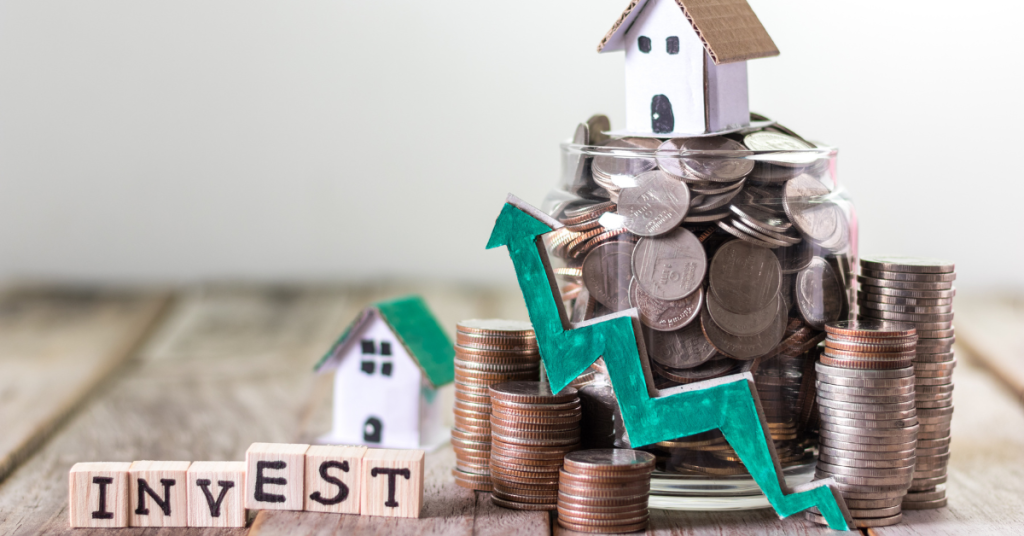
What Makes a Good Investment Property
An investment property in the right location with the right tenant profile can be one of the most reliable wealth-building tools available. The key word is “right.” Not every property makes a good investment. Location, tenant demand, price point, running costs, and management quality all determine whether a property makes money or loses it. Getting these factors right is what separates successful property investors from those who end up selling at a loss.
The best investment properties in South Africa share a few common characteristics. They’re in areas with strong rental demand, which means there’s a deep pool of potential tenants and low vacancy risk. They’re priced at a point where the rental income covers or comes close to covering the monthly costs including bond, levy, rates, and insurance. They’re in well-managed buildings or estates where the common property is maintained and the security is professional. And they’re in locations where long-term capital growth is supported by infrastructure development, commercial activity, and population growth.
Apartments in managed estates tick most of these boxes by default. The security is handled, the maintenance is handled, the communal facilities add to the rental appeal, and the levy structure is transparent and predictable. For a first-time investor who doesn’t want to deal with the hands-on management demands of a freestanding rental house, an apartment in a well-run estate is the simplest and most practical entry point.
Where to Invest
The strongest rental markets in South Africa are in the major metros: Johannesburg, Pretoria, Cape Town, and Durban. Within these cities, certain nodes outperform others. Areas near universities, hospitals, major employers, and transport hubs tend to have the highest demand and the lowest vacancy rates. Apartments and smaller units tend to rent faster than large houses, and the tenant pool for affordable, well-located units is deep and consistent.
New developments in growth corridors offer particularly good opportunities. These areas benefit from ongoing infrastructure investment, new commercial developments, and population growth, all of which drive property values upward over time. Buying into a new development at launch price, before the area is fully established, can result in above-average capital growth as the surrounding area matures. The risk is slightly higher than buying in an established area, but the reward potential is greater.
Pretoria East, Umhlanga, Cape Town’s Northern Suburbs, and Midrand are all examples of nodes where new developments have delivered strong returns for early buyers. The pattern is consistent: infrastructure goes in, commercial activity follows, residential demand grows, and property values rise. Being ahead of that curve is where the best investment returns are found.
Common Mistakes to Avoid
The biggest mistake first-time property investors make is expecting instant results. Property doesn’t work like stocks that can double in a year. It works slowly, steadily, and reliably over time. The investor who buys a solid property, puts a good tenant in it, and holds for 10 years will almost always come out ahead. The investor who buys, panics during a slow period, and sells after two years will almost always lose money. Transaction costs alone, including transfer duty, agent commission, and bond cancellation fees, mean that selling a property within the first few years of ownership almost guarantees a loss.
Another common mistake is buying based on emotion rather than numbers. A property that looks beautiful but is in a low-demand rental area or is overpriced relative to the achievable rent is a bad investment regardless of how nice the kitchen looks. The numbers have to work. The rental income needs to be realistic, the total monthly costs need to be manageable, and the location needs to support long-term demand.
The Long-Term View
South Africa’s property market has its challenges. Interest rate fluctuations, political uncertainty, and economic slowdowns all affect sentiment and short-term pricing. But over the long term, property in South Africa has consistently delivered positive real returns for investors who bought sensibly and held patiently. That track record is hard to argue with, and for anyone looking to build wealth over the next decade, property remains one of the most accessible and proven ways to do it.
The starting point is simple. Get pre-qualified for a bond. Set a budget. Identify an area with strong rental demand. Find a well-priced apartment in a well-managed estate. Put a good tenant in it. And then hold. The property does the rest over time, and 10 years from now, the decision to buy will look like one of the smartest financial moves ever made.