Older pieces often feel different from new stock. The shapes can be bolder. The details can be finer. Some items were made by hand in small batches, so small marks and tiny design choices make each piece feel one of a kind.
A buyer once found a simple gold ring at a family sale. It looked plain at first glance. Inside the band was a tiny date and initials. The ring became a daily wear piece, not for the look alone, for the meaning carried forward.
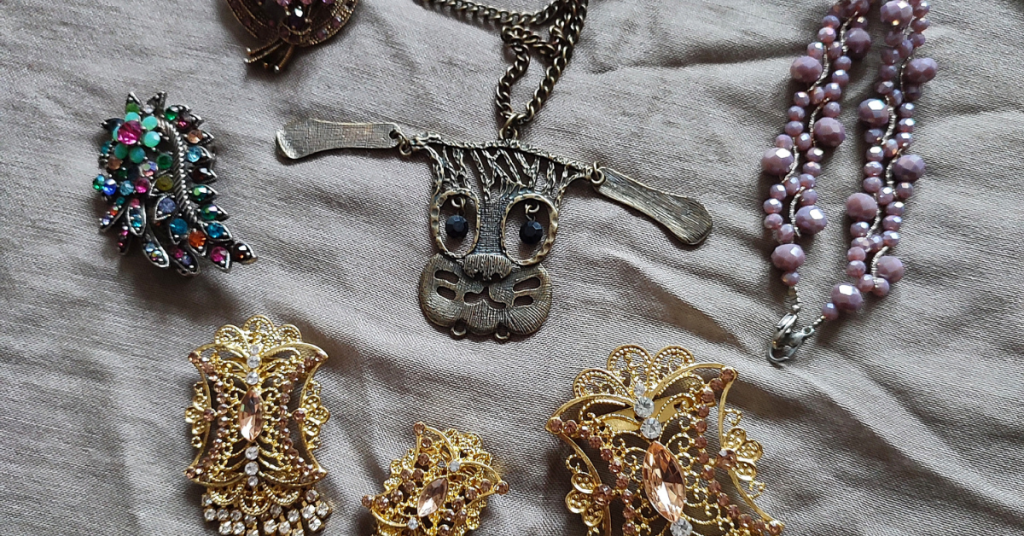
What These Labels Usually Mean
People use these terms in slightly different ways, so it helps to focus on the idea behind each one.
- Estate Jewelry usually means a piece that has had an owner before. The age can vary. Some pieces are old. Some are not that old. The main point is prior ownership.
- pre-owned jewelry is a clear, plain label. It means the item is not new. It may be modern in style, with light wear, or it may be older in design.
- vintage jewelry often points to pieces from past decades. The style links to a time period, with cuts, settings, and patterns that were common then.
These labels help set expectations, yet the real value comes from what is in front of you: the metal, the stones, the build, the condition, and the design.
What To Look At Before Buying
Start With The Metal
Check for marks inside the band or near the clasp. Many pieces have a stamp for the metal type. Some pieces have worn stamps, so the mark may be faint. A clean stamp does not prove everything on its own, yet it is a useful start.
Look at the surface finish. Scratches are normal on older pieces. Deep dents, sharp edges, and bent parts can mean past knocks or weak spots.
Check The Stone Setting
Gently look at how the stones sit in the setting.
- Prongs should sit snug against the stone.
- Bezel edges should not lift.
- Stones should not rattle.
A person once bought a ring for a birthday gift. The stone looked perfect under bright shop lights. At home, the stone moved slightly. A quick fix solved it, yet it shows why a slow, close check matters.
Look At Clasps And Hinges
Bracelets and necklaces depend on clasps. Open and close the clasp a few times. It should feel firm. Hinges on bangles should close cleanly. Earrings should sit straight and feel stable.
If a clasp feels loose, it can often be repaired. Repairs take time and cost, so it helps to spot this early.
Fit, Comfort, And Daily Wear
A piece can look great and still be hard to wear.
Rings: Think about how it will feel through a normal day. A high setting can snag on clothing. A wide band can feel tight when hands warm up.
Necklaces: Check the length. A short chain can sit at the base of the neck. A longer chain can sit on the chest. Each length suits different necklines.
Earrings: Older earrings can have thinner posts. If ears are sensitive, comfort matters as much as style.
Simple Care Without Fancy Tools
Older jewelry can last for decades more with basic care.
Storage
Store pieces apart so they do not rub together. A soft pouch or a small box with sections helps. Keep chains closed so they do not knot.
Cleaning
A soft cloth after wear removes skin oils. For deeper cleaning, mild soapy water and a soft brush can work for many pieces. Pearls, soft stones, and fragile settings need extra care, so gentle handling is best.
Avoid harsh cleaners and rough scrubbing. If a piece has a stone you are unsure about, keep cleaning light.
Wearing Habits
Put jewelry on after lotions, perfume, and hair products. Take jewelry off before gym work, heavy lifting, pool time, or cleaning.
Style Ideas That Feel Natural
Older pieces do not need a full vintage outfit. Mixing styles can look modern and relaxed.
One Statement Piece
A bold ring or a patterned bracelet can carry a simple outfit. Plain shirt, plain jacket, simple shoes. Let the jewelry do the work.
Layering Chains
Two fine chains at different lengths can look neat. Add one pendant chain. Keep it simple. If the chains tangle easily, fewer layers will feel better.
Mixing Metals
Gold with silver can work when the shapes match. Keep the look balanced. If one piece is bold, keep the rest calm.
A person once wore a small heirloom pendant with a modern watch and simple studs. The pendant stood out without looking out of place.
A Practical Buying Checklist
Ask For Clear Details
Ask what metal the piece is, what stones are set, and what work has been done. Many older pieces have had resizing, polishing, or stone swaps over time.
Look For Photos That Show Real Wear
If buying from photos, look for close shots of prongs, clasps, hallmarks, and edges. Blurry photos hide issues.
Plan For Small Fixes
Even strong older jewelry may need a clasp fix, a polish, or a prong tighten. Build that into the plan.
Keep The Purchase Purpose Clear
Is it for daily wear, a gift, or a once-a-year event piece. A daily wear ring needs a solid setting. An event piece can be more delicate.
Passing Pieces On
Older jewelry often becomes part of a family story. A ring can mark an engagement. A bracelet can mark a milestone. A pendant can be worn as a reminder of someone important.
A family once split a small group of items after a grandparent passed away. One person chose the most valuable item. Another chose a simple chain with a small charm. The charm had little market value. It was worn every day after that.
That is the quiet power of older jewelry. It can carry memory, style, and craft in a way that feels real when worn.