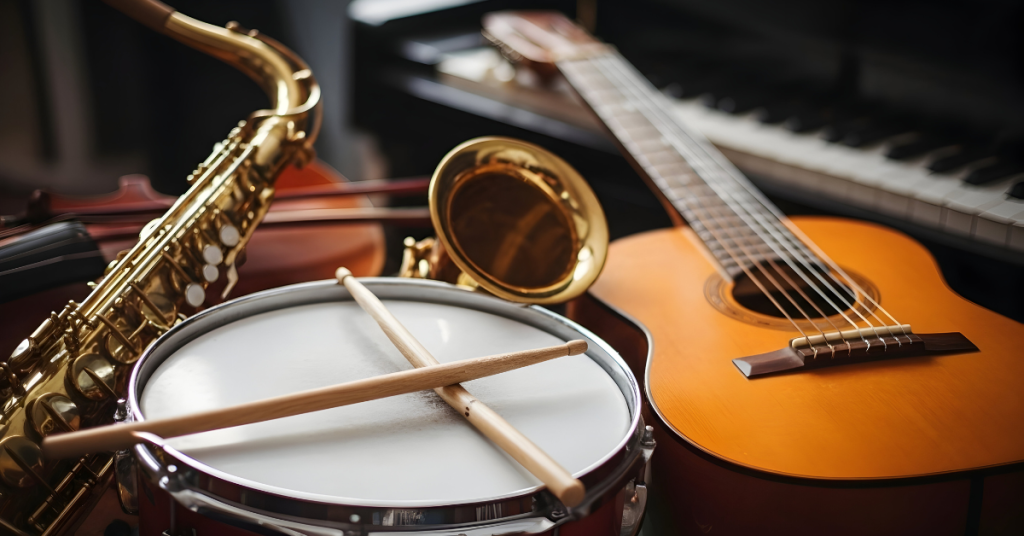
Getting into music — whether as a beginner, a hobbyist, or someone who’s been playing for years — means eventually dealing with gear. It can feel like a lot to take in. There are instruments, recording tools, DJ setups, and live sound equipment, each with their own specs, terminology, and price ranges. Knowing what each category actually does and what to look for makes the buying process much less stressful.
This article breaks down the main areas of music gear so you can make a more informed choice before spending your money.
Starting Out With Keys and Why It Makes Sense
There’s a reason so many music teachers start students on piano before any other instrument. The layout of the keys is completely visual — every note has a physical position on the keyboard, and you can see exactly where semitones and whole tones fall. That makes music theory much easier to absorb when you’re starting out.
Pianos also transfer well to other instruments. Once you understand scales, chords, and intervals, picking up a guitar or bass becomes a lot more logical. It’s a genuinely useful starting point regardless of where your musical interests end up going.
Beyond learning, piano sits comfortably in almost every genre — from classical and gospel to pop, jazz, R&B, and film scoring. If you have one in your house or studio, it will get used.
Acoustic vs Electronic: What Actually Matters
When looking at Pianos for Sale, you’ll immediately notice there are two broad categories: acoustic and electronic.
Acoustic pianos produce sound through strings and hammers. When you press a key, a felt hammer strikes a string inside the instrument and the soundboard amplifies the vibration. The feel is natural, and the tonal response — how the sound changes depending on how hard or soft you play — is very nuanced. The downside is that acoustic pianos are heavy, expensive to move, and need regular tuning.
Electronic pianos and keyboards remove most of those practical problems. They’re lighter, they never go out of tune, and most have headphone outputs so you can practise without waking up the rest of the house. Many also have built-in recording features, hundreds of instrument sounds, and connectivity to music software — things an acoustic can’t offer.
For most people practising at home, an electronic option makes more practical sense. For professional performance and serious classical study, acoustic tends to win out on feel and responsiveness.
Choosing the Right Instrument
Not all options are the same when shopping for a keyboard piano, and the differences matter more than most people think before buying.
Number of keys: A standard acoustic piano has 88 keys. Many entry-level keyboards have 61. For beginners, 61 is workable — but if you ever plan to play more complex arrangements, 88 gives you the full range.
Weighted vs unweighted keys: Weighted keys are designed to simulate the resistance of acoustic piano keys. Unweighted keys are lighter and more suitable for organs, synths, and performance pads. If you’re coming from acoustic piano or want that feel, weighted is the better option.
Polyphony: This refers to how many notes the instrument can produce at once. Lower polyphony can cause notes to cut out when you’re holding a sustain pedal and playing chords. 64-note polyphony is the minimum — 128 and above is better for more complex playing.
Connectivity: Does it have a USB port for connecting to a computer? MIDI output? Bluetooth? These features matter more once you start recording or using music software.
Why Some Brands Get Recommended More Than Others
Among the options you’ll come across when searching for Keyboards for Sale, certain brands tend to come up across the board — for beginners, intermediate players, and professionals alike.
Yamaha Pianos have a long track record, both on the acoustic side and with their electronic range. The instruments hold up over time, with key action and sound quality that punches above the price in many of their models. Yamaha Keyboards in particular are widely used in schools, home studios, and performance setups because they cover a wide range of needs without compromising on build quality.
That said, the best keyboard for you depends on how you’ll use it. A student who needs a quiet at-home practice instrument has different requirements from a gigging musician who needs something portable and durable. Spend time with a few models before committing, and pay attention to how the keys feel under your hands rather than just the features listed on the box.
Recording at Home and Where to Start
Once you’re playing regularly, the next step for many musicians is recording. Home recording has become a lot more accessible over the past several years — you don’t need a professional studio to get clean, usable audio.
A basic home recording chain typically includes an audio interface, a condenser or dynamic microphone, monitoring headphones or studio monitors, and recording software. That setup covers most situations, from recording vocals and acoustic instruments to capturing electronic keyboards.
Podcast Equipment sits in a very similar category, and much of the gear overlaps. If you’re thinking about starting a music channel, documenting your playing, or launching a podcast alongside your music work, the investment covers both. Microphones, audio interfaces, and mixers are shared tools across recording, podcasting, and voiceover work.
One thing that makes a bigger difference than most people expect: the room you’re recording in. Hard, parallel walls cause sound to bounce around and create a muddy, echo-heavy recording. Bookshelves, curtains, foam panels, and soft furnishings all help absorb that sound. Sorting the room out before buying expensive microphones will give you better results faster.
DJ Setups and Getting the Monitoring Right
DJing has its own set of gear requirements, and the setup looks quite different from live performance or studio recording. A typical DJ rig includes a controller or mixer, decks (physical or software-based), a pair of speakers, and headphones.
DJ Headphones are not the same as regular listening headphones. When DJing, the headphones are used for cueing — you’re listening to the next track before the audience hears it, so you can line up the beats and mix it in smoothly. That means the headphones need to be loud enough to hear clearly over a noisy room, accurate enough to let you monitor timing, and comfortable enough to wear for several hours at a stretch.
Closed-back headphones are standard for DJs because they block out external noise. Many DJ headphones also have a swivelling ear cup, which lets the DJ hold one side against one ear while the other ear listens to the room — a common monitoring technique when mixing live.
Sound for Live Performance
PA Systems take audio input — microphones, instruments, playback devices — and push it through speakers so an audience can hear it. If you’re performing live at any scale, from a small café to an outdoor event, you’ll need one.
A standard setup includes a mixer to control input levels and EQ, amplification through either a separate power amp or powered speakers, main speakers, and stage monitors. Stage monitors are the speakers that face the performers rather than the audience — they let the band hear themselves clearly so they can stay in time and in tune.
The size of the system you need depends entirely on the space. A small acoustic performance in a coffee shop can work with a single powered speaker and a compact mixer. A medium-sized venue might need two main speakers, a subwoofer for the low end, and at least two monitor mixes. Large outdoor events require significantly more power and coverage.
Renting before buying is worth considering if you only perform occasionally. It lets you test different setups and figure out what you actually need before making a bigger purchase.
Building a Setup That Works for You
There’s no single correct way to put together a music setup. The right gear depends entirely on what you’re doing — practising, recording, performing, DJing, or some combination of all of them.
Start with what removes the biggest obstacle in your current situation. If you don’t have an instrument yet, start there. If you’re playing but can’t record, look at your recording chain. If you’re performing and the sound isn’t cutting through, look at your PA situation.
Buying everything at once rarely works out well. Most people end up with gear they don’t use and gaps where they actually needed something specific. Buy one thing, learn it properly, and then move on to the next piece when you actually need it. That’s how most working musicians build their setups — step by step, over time.