Canadian winters are long. When it’s minus twenty outside and the roads are icy, there’s something genuinely satisfying about having a dedicated space at home where you can watch a film in real comfort. That’s why home theatre rooms have become one of the more popular home improvement projects across Canada over the past several years, and the seating is usually where people either get it completely right or leave the whole thing feeling slightly unfinished.
Good seating makes an enormous difference to how a room feels and performs. The right setup turns a spare room with a big screen into something that actually rivals the cinema experience. The wrong setup means sore backs, arguments about who got the good seat, and a room that nobody really wants to spend three hours in.
What Makes Home Theatre Seating Different from Regular Furniture
The difference between a standard couch and proper home theatre chairs comes down to a few things: viewing angle, recline, support during long watch sessions, and often the ability to hold drinks and snacks without balancing everything on your lap.
Regular sofas are designed for conversation and casual sitting. They face each other or sit at angles that work for a living room layout. Theatre seating is designed around a single activity: watching a screen for an extended period. The seat depth, back angle, headrest position, and legrest are all calibrated for that specific use.
Cinema seating is also typically designed to stack well in rows, so that everyone in the room has a clear sightline to the screen regardless of where they’re sitting. When you’re watching a film with four or five people, having someone’s head blocking the bottom quarter of the screen gets old quickly.
The Most Popular Seating Options
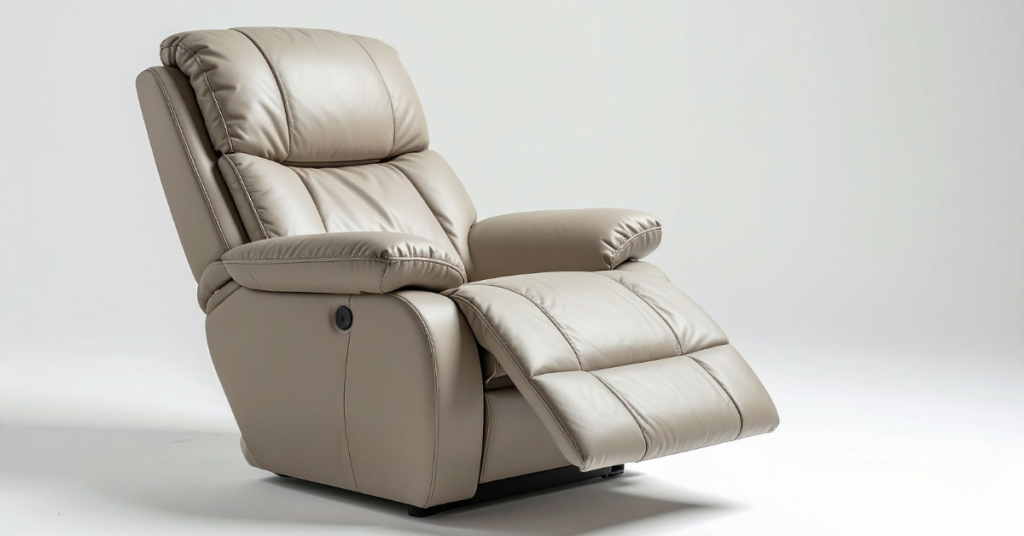
Recliners arranged in rows are probably the closest thing to a true cinema setup. Each seat operates independently, so one person can be fully reclined and another can be sitting upright without any compromise. Cinema recliners typically come with power controls, built-in cup holders, and sometimes USB charging ports along the armrest.
Sectional configurations work well in larger rooms where you want a more relaxed, social feel. A well-chosen cinema room sofa that curves or angles toward the screen gives multiple people a good view without the formal row arrangement. These suit rooms that double as a general gathering space rather than a dedicated screening room.
Tiered seating is the most authentic cinema feel. By raising the back row on a platform, everyone gets an unobstructed view even when the person in front is fully reclined. This requires more planning and a taller room, but the result is impressive and genuinely functional.
Choosing Between Individual Chairs and Full Couches
This is one of those decisions that splits people fairly cleanly into two camps.
Home cinema couches are more flexible. You can fit an extra person when needed, kids can sprawl across them, and they feel more relaxed and casual. The trade-off is that everyone’s viewing experience is slightly different depending on where they’re sitting, and if one person wants to recline while another doesn’t, there can be some negotiation involved.
Individual home cinema chairs give each person exactly the same experience regardless of where they sit. Each seat reclines on its own, each person has their own armrests and cup holder, and nobody has to compromise. The downside is that you lose flexibility. Six chairs seat six people and no more. They also tend to make a room feel more formal, which suits a dedicated screening room but can feel a bit stiff in a multipurpose space.
Many people end up going with a combination: a row of individual seats in the back and a large home cinema sofa or home theatre couch at the front for more casual viewing or for when younger kids are watching.
Materials and Durability in the Canadian Climate
Canadian homes deal with a wide range of temperatures and humidity levels throughout the year. In winter, forced-air heating systems dry out the air significantly, which can affect certain materials over time. In summer, humidity can swing in the other direction depending on the region.
Leather and high-quality bonded leather hold up well across these conditions when properly maintained. They’re easy to wipe down, which matters if the seating is being used for snacks and drinks regularly. Full-grain leather is the most durable option and actually improves with age. Bonded leather is more affordable but tends to show wear sooner, particularly around high-contact areas like armrests.
Fabric options are softer and warmer to sit on, which has obvious appeal during a Canadian winter. Look for tightly woven fabrics with a stain-resistant treatment. Microfibre performs particularly well in this setting, being both soft and relatively forgiving when it comes to spills.
Room Layout and Viewing Distance
No matter how good the seating is, if the placement is wrong, the experience suffers. The general rule for viewing distance is that you should be sitting between 1.5 and 2.5 times the diagonal screen size away from the screen. For a 100-inch screen, that puts the ideal seating distance somewhere between roughly 3.8 and 6.3 metres.
Theatre style seating that’s too close creates neck strain and makes it harder to take in the full image. Too far away and you lose the sense of immersion that a big screen is supposed to create.
Room width also determines how many seats you can fit across. Allow at least 50 to 60 centimetres per seat plus some clearance on each side for comfortable movement. If the room is wide enough for three seats but tight on clearance, consider going to two seats with more space around them rather than cramming in three.
Sound and Seating Work Together
This is a point that gets overlooked surprisingly often. Where people sit in a room affects what they hear just as much as the speakers and amplifier do. The sweet spot for most surround sound setups is in the middle of the room, not pushed right up against the back wall.
Home cinema sofas pushed against the back wall tend to create a muddy bass response because sound waves bounce off the wall directly behind the listener. Moving seating forward even half a metre can make a noticeable improvement to how the audio sounds.
If you’re working with movie theatre seats for home in a tiered setup, the elevated back row is actually at an acoustic advantage in many rooms. The raised position moves listeners away from the floor, which reduces certain low-frequency issues that affect people sitting directly on the ground level.
Practical Features Worth Paying For
Cup holders seem like a minor detail, but anyone who has watched a three-hour film while holding a drink for the first hour and then not knowing where to put it will tell you otherwise. Integrated cup holders in cinema chairs are one of those features that gets used constantly.
Storage armrests, which open up to reveal a storage compartment, are useful for remote controls, reading glasses, and other small items that tend to get lost in a couch.
USB charging ports are increasingly standard on higher-end pieces. Having a charging point built into the armrest means phones stay charged without extension cords running across the floor.
Tray tables that fold out from the armrest are worth considering if the room is used regularly for eating and drinking. They provide a proper flat surface for plates and glasses rather than requiring everyone to balance things on their laps.
Getting the Right Amount of Seating
Home theatre couches and chair configurations should be sized to the room and to how the space will actually be used. A room that’s primarily for the household of four doesn’t need eight seats. A space that gets used regularly for larger gatherings needs more flexibility.
Think about the maximum number of people who’ll realistically be using the room at once, and plan the seating around that number with a seat or two extra for guests. Oversizing the seating for a room that’s usually used by two or three people means most of the seats sit empty most of the time, which isn’t a great use of space or money.
The home theatre sofa couch format works well for households that want flexibility, the ability to seat more people occasionally, and a less structured feel in the room. The individual seat format works better when everyone wants their own defined space and the room is primarily used as a proper screening room rather than a general hangout.
Getting the seating right is genuinely one of the most satisfying home upgrades you can make, particularly in a country where spending long evenings indoors is just part of life for several months of the year. When it all comes together, a cold night outside stops feeling like something to get through and starts feeling like a good excuse to stay in and watch something great.