Getting a chemical splash in the eyes is one of those things that happens in seconds but can cause damage that lasts a lifetime. A worker pours a solvent and it splashes back. Someone opens a battery and acid flicks upward. A pressurised line bursts and sends coolant into somebody’s face. These are not rare events. They happen in workshops, factories, laboratories, and warehouses all the time.
The first 10 to 15 seconds after a chemical hits the eyes are the most critical. Medical professionals call this the “golden window” for flushing. If clean water reaches the eyes within that time, the chances of serious injury drop dramatically. Wait longer, and the chemical starts doing real damage to the cornea and surrounding tissue.
That short window is exactly why having the right equipment close by matters so much.
What an Eye Wash Station Actually Does
An eye wash station is a fixed or portable unit designed to deliver a controlled flow of clean water (or saline solution) directly to the eyes and face. The idea is straightforward: when something gets into a worker’s eyes, they walk up to the station, activate it, and flush both eyes at the same time for at least 15 minutes.
Most stations have two nozzle heads positioned to direct water into both eyes simultaneously. The flow is gentle enough not to cause further injury but strong enough to wash away the contaminant. Some units include a face wash bowl as well, covering the broader area around the eyes, nose, and cheeks.
There are a few main types worth knowing about. Plumbed stations connect directly to a water supply and deliver a continuous flow. They are the gold standard for busy sites with regular chemical exposure. Self-contained or portable stations hold a reservoir of water or saline and do not need plumbing. These work well in remote areas, construction sites, or anywhere a water line is not available. Wall-mounted and pedestal-mounted versions are the most common fixed installations.
Some units combine an eye wash with a full body shower. These combination units are used in labs and chemical plants where a splash could hit the face and body at the same time.
Where They Need to Be Installed
Placement is one of the most common mistakes. A station tucked away in a back corridor or behind a locked door does nobody any good during an emergency. The standard rule is that a worker should be able to reach the station within 10 seconds of walking at a normal pace from any point in the hazard area. That works out to roughly 16 to 17 metres.
The path to the station should be clear and unobstructed. No doors that need a badge to open. No steps or raised platforms to climb. No equipment blocking the route. When someone has chemicals in their eyes, they are not seeing clearly, and they are moving fast. Anything in the way becomes a serious problem.
Eye wash stations should be installed on the same floor as the hazard. Making an injured worker go up or down stairs to reach flushing equipment is dangerous and, in most regulatory frameworks, non-compliant.
Areas that typically need stations include chemical storage rooms, battery charging stations, laboratories, paint mixing areas, workshops that use solvents or degreasers, and any spot where acids, alkalis, or irritants are handled.
The ANSI/ISEA Z358.1 Standard
The international benchmark for emergency eye wash and shower equipment is the ANSI/ISEA Z358.1 standard. This standard sets out the requirements for flow rate, water temperature, activation time, and maintenance schedules.
A few specifics from the standard are worth mentioning. The unit must deliver flushing fluid to both eyes at the same time. The flow rate needs to be at least 1.5 litres per minute for at least 15 minutes. The water temperature should be between 16°C and 38°C, which is described as “tepid.” Water that is too cold causes the user to stop flushing early. Water that is too hot can increase chemical absorption and cause burns.
The station must be activated in one second or less, using a single motion. In practice, this means a push plate, a paddle, or a lever that the user hits with one hand. Both hands then stay at the user’s sides or hold the eyelids open during flushing.
South African workplaces often reference this standard alongside local regulations under the Occupational Health and Safety Act and the SANS standards. Inspectors typically expect compliance with these benchmarks, and insurance assessors look for them too.
Maintenance That Gets Overlooked
Installing a station is one thing. Keeping it working is another, and this is where a lot of workplaces fall short.
Plumbed stations need to be flushed weekly. This is not just a regulatory box to tick. Water that sits stagnant in the pipes grows bacteria, develops biofilm, and can become contaminated enough to cause infections in already-injured eyes. A weekly flush of at least three minutes pushes fresh water through the system and keeps things sanitary.
Self-contained stations need their fluid replaced on a schedule set by the manufacturer. Sealed cartridges with saline solution typically last between 12 and 24 months. After that, the solution degrades and may not be sterile. A station with expired fluid is about as useful as an empty one.
Dust caps on the nozzles should be in place when the station is not in use. Open nozzles collect dust, insects, and debris. When someone activates the station in an emergency, the last thing they need is grit getting flushed into their already-irritated eyes.
Inspection logs should be kept. Most standards ask for a documented weekly check that includes visual inspection, a brief activation test, and a sign-off. During audits, these logs are one of the first things inspectors ask to see.
Common Mistakes Worth Knowing About
Wrong placement. Putting the station too far from the hazard area, or somewhere that requires turning corners and opening doors. Ten seconds matters when chemicals are burning.
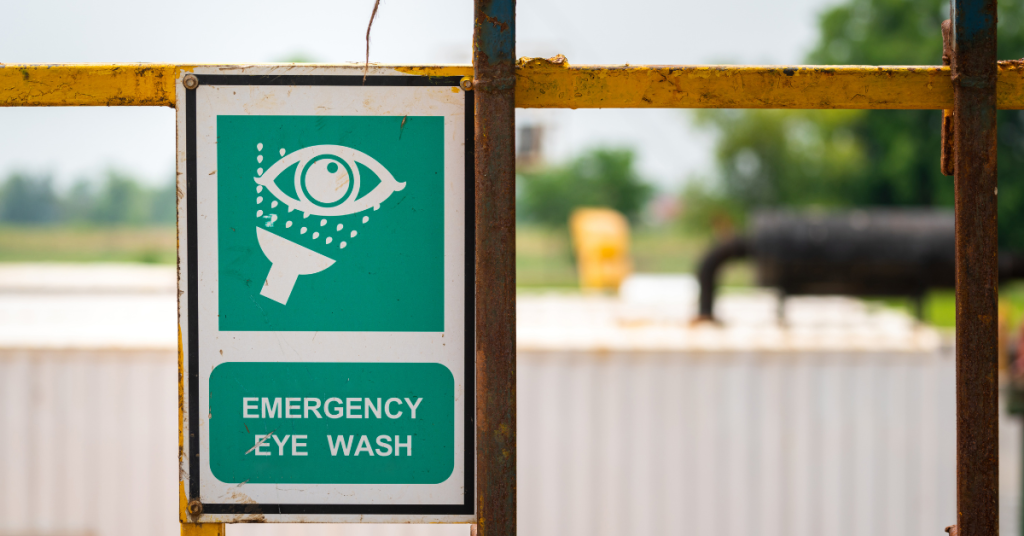
No signage. The station needs to be clearly marked with a sign visible from a distance. Standard green and white safety signs are used for this. If workers do not know where the station is, it might as well not exist.
Blocked access. Stacking boxes, parking trolleys, or placing equipment in front of the station happens more often than it should. Regular walk-throughs catch this before it becomes a problem during an actual incident.
Ignoring temperature. In cold regions or unheated buildings, water in the lines can drop below the acceptable range, making it painful to use for the full 15-minute flush. Some stations come with thermostatically controlled mixing valves to handle this.
Expired fluid in portable units. Self-contained stations look fine from the outside. The only way to know if the fluid inside is still good is to check the expiration date and follow the replacement schedule.
A Real Situation That Shows Why This Matters
A battery workshop in Gauteng had an eye wash station mounted on the wall, fully plumbed and properly signed. During a routine maintenance check, a technician got a splash of diluted sulphuric acid from a forklift battery. He reached the station in about six seconds, pulled the paddle, and flushed both eyes for 20 minutes. The on-site first aider monitored him and then sent him to a clinic for a check-up. The doctor confirmed no lasting damage.
The site manager later said that the same scenario three years earlier, before the station was installed, sent a worker to hospital with corneal burns that took weeks to heal and led to permanent vision reduction in one eye.
Same workshop, same chemicals, very different outcomes.
What It Costs vs What It Saves
A basic plumbed station costs a fraction of what a single workplace eye injury claim runs to. Medical treatment, lost work days, compensation payouts, increased insurance premiums, and potential regulatory penalties all add up fast. A serious chemical eye injury can result in tens of thousands of rands in direct costs, and the indirect costs go higher still.
The station itself, installed and maintained, is one of the least expensive pieces of safety equipment relative to the protection it provides. The maths on this one is not close.
Getting It Right Is Not Hard
Placing the right equipment in the right spot, keeping it maintained, and making sure every worker knows where it is and how to use it is not a complicated process. It takes a bit of planning upfront and a few minutes of attention each week after that. The payoff is that when something goes wrong, and eventually it will, the difference between a near-miss and a life-changing injury comes down to whether that station was there, working, and reachable.