Johannesburg is a city of contrasts when it comes to property. Some suburbs have seen prices double over the past decade. Others have stayed flat or dropped. For buyers looking at flats and apartments, Joburg offers more choice and better value per square metre than Cape Town, and in many areas, better rental returns too. The trick is knowing which parts of the city are worth buying into and which ones to avoid.
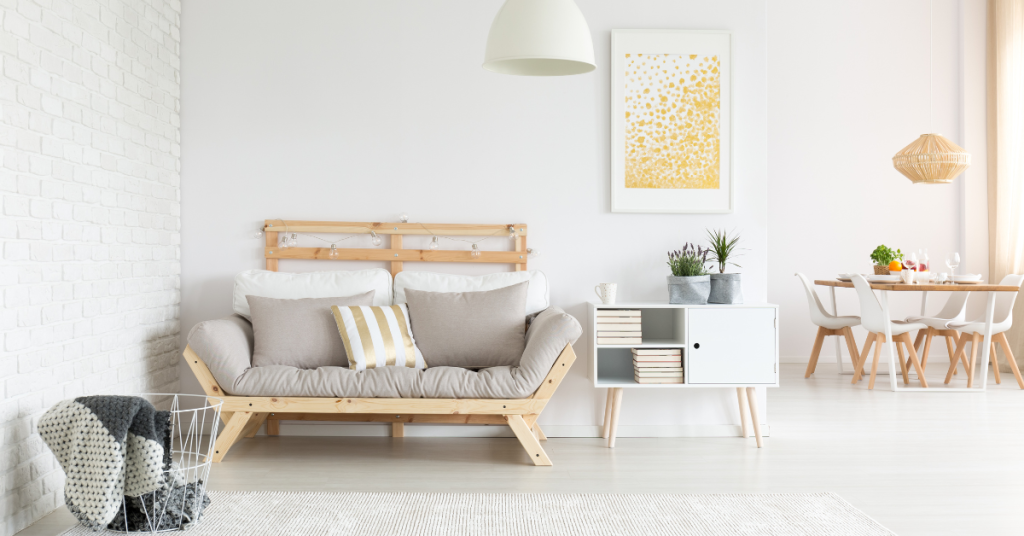
Why Flats in Johannesburg Make Sense for First-Time Buyers
The average house price in Johannesburg’s popular northern suburbs sits well above what most first-time buyers can afford on a single income. A freestanding house in Randburg, Linden, or Northcliff will set you back R1.5 million or more, and that is before transfer costs, bond fees, and the inevitable maintenance that comes with an older house.
A flat in the same area can cost half that. One-bedroom units in Randburg and Ferndale start from around R500,000 to R700,000. Two-bedroom flats in the same belt range from R700,000 to R1.2 million. In Sandton and surrounding areas like Bryanston and Rivonia, the prices climb, but a one-bedroom apartment is still within reach at R800,000 to R1.5 million.
For a buyer earning R25,000 to R35,000 per month, a flat in the R600,000 to R900,000 range is realistic with a twenty-year bond. The monthly repayment on a R750,000 bond at prime (11.75%) comes to roughly R7,950, which leaves room for levies, rates, and living expenses.
When browsing flats for sale in Johannesburg, the range of options across different suburbs and price brackets is wider than many first-time buyers expect.
The Best Areas for Apartment Buyers
Johannesburg is a spread-out city, and where you buy matters more than almost anything else. A few areas stand out for apartment buyers.
Sandton and surrounds. Sandton is the financial hub of South Africa. The demand for apartments here is driven by professionals working in the Sandton CBD, along with a large expat and business traveller population. Rental demand is strong, and prices hold well. The downside is that entry prices are higher than most other Joburg suburbs. A decent one-bedroom apartment in Sandton Central starts at R1 million or more.
Midrand. Sitting halfway between Johannesburg and Pretoria along the N1 corridor, Midrand has become one of Gauteng’s most popular areas for new apartment developments. Major corporate parks like Waterfall and Kyalami have drawn employers and employees into the area, creating a large pool of tenants and buyers. Prices are more moderate than Sandton, with one-bedroom units available from R600,000 and two-bedroom units from R800,000 to R1.3 million.
Randburg and Ferndale. These suburbs offer good value for buyers who want to be close to the Sandton business district without paying Sandton prices. The area has a mix of older sectional title complexes and newer developments. It is well served by shopping centres, restaurants, and medical facilities. Entry-level one-bedroom flats can be found from R450,000 to R650,000.
Rosebank and Parktown. Rosebank has grown into a secondary business node with a strong retail and entertainment presence. Apartments here attract young professionals and students from the nearby University of the Witwatersrand. Pricing is mid-range to premium, with one-bedroom units starting around R900,000 to R1.3 million.
Fourways and Lonehill. Further north, these suburbs appeal to families and professionals who want a quieter environment with easy access to good schools and the Fourways Mall precinct. Apartment stock has grown significantly in recent years, with new complexes offering modern finishes and shared amenities. One-bedroom units start from R650,000.
Johannesburg CBD and Braamfontein. The inner city is a more complex proposition. Parts of the CBD have seen significant regeneration, with converted buildings offering modern apartments at competitive prices. Braamfontein, anchored by Wits University and the Neighbourgoods Market, has a youthful, creative energy. Prices are lower than the northern suburbs, with studios and one-bedroom units available from R350,000 to R600,000. The trade-off is that security concerns and inconsistent municipal services remain real issues in parts of the inner city. Buyers need to do thorough research on the specific building and block before committing.
What to Check Before Buying
The usual checks that apply to any apartment purchase are doubly important in Johannesburg, where the quality gap between well-managed and poorly managed complexes can be enormous.
Body corporate financials. Request the latest financial statements and the minutes from the last two or three annual general meetings. Look at the reserve fund balance. A complex with a healthy reserve can absorb unexpected repairs without hitting owners with special levies. A complex with a thin reserve fund and a long list of deferred maintenance is a financial risk.
Levy collection rate. Find out what percentage of owners are up to date with their levies. If 20% or more of the owners are in arrears, the body corporate is probably struggling to maintain the building and pay service providers. This shows up as broken lifts, unkept gardens, unreliable security, and deteriorating common areas.
Security infrastructure. Johannesburg’s security concerns are real, and the quality of a complex’s security setup matters a lot. Access control at the gate, CCTV, perimeter fencing or walls, and on-site guards are standard. Some newer complexes add biometric access, boom gates with intercom systems, and 24-hour control rooms. Walk the perimeter and look at the condition of the fencing, cameras, and lighting. A complex that has let its security slip is a red flag for both personal safety and resale value.
Parking. Covered parking is a must in Johannesburg, where hail damage is a regular occurrence during summer thunderstorms. Make sure the unit comes with at least one covered bay. Some complexes offer additional open bays, but these leave the vehicle exposed to weather and potential break-ins.
Water and electricity. Find out whether the complex is on a bulk or individual metering system for water and electricity. Individual meters mean each owner pays for their own usage, which is fairer and more transparent. Bulk metering means the cost is split across all units, which can result in subsidising neighbours who use more than their share.
Rental Returns for Investors
For buyers looking at Johannesburg apartments for sale as investment properties, the city offers some of the best rental yields in South Africa. Gross yields of 8% to 11% are achievable in well-located areas with strong tenant demand.
The tenant pool in Johannesburg is large and varied. Young professionals working in Sandton and the northern suburbs, students at Wits and UJ, contract workers, and small families all need rental accommodation. Areas close to major employment nodes and public transport routes tend to have the shortest vacancy periods and the most stable rental income.
A one-bedroom flat in Randburg purchased for R600,000 and rented at R5,500 to R6,500 per month delivers a gross yield of around 11% to 13%. After deducting levies, rates, insurance, and management fees, the net yield drops, but it remains competitive compared to other South African cities.
For investors looking at apartments to buy Johannesburg specifically for rental income, the sweet spot is a two-bedroom unit in the R700,000 to R1.2 million range in a suburb with strong corporate and professional tenant demand. These units attract stable tenants, command reasonable rents, and have manageable running costs.
The Buying Process
Getting bond pre-approval before starting the search sets the budget and signals to sellers and agents that the buyer is ready to move. Most banks process pre-approval within a few working days at no cost.
Transfer timelines in Gauteng typically run eight to twelve weeks from accepted offer to registration. Transfer costs on a R800,000 flat, including transfer duty (for properties above R1.1 million the rates change), conveyancing fees, and bond registration, come to approximately R30,000 to R50,000. First-time buyers should have this cash available upfront, as it is not financed by the bond.
A deposit is not always required. Several banks offer 100% bonds to first-time buyers with clean credit records and stable employment. Having a deposit of 10% or more improves the interest rate and lowers the monthly repayment, but it is not a barrier to entry.
Johannesburg’s flat and apartment market is one of the most active in the country, with new stock coming onto the market regularly and a wide range of price points across different suburbs. Buyers who take the time to compare areas, read the body corporate financials, and run the numbers properly will find solid options across the city.