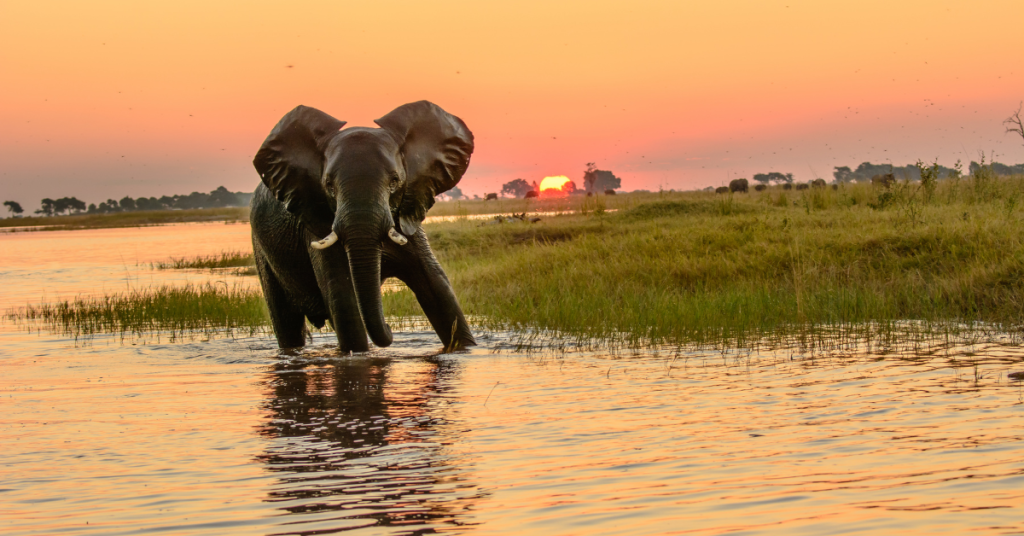
Southern Africa has plenty of countries worth visiting, but two stand out for travellers from South Africa looking for something different. Botswana brings the wild side, with open plains, salt pans, and some of the best game viewing on the continent. Mozambique brings the beach side, with warm seas, white sand, and seafood pulled straight from the boat.
This article looks at what each country has to offer, when to go, and what to think about before booking a trip.
Botswana: A Different Kind of Bush Experience
Botswana has built its tourism around a low-volume, high-quality model. Where some countries pack in as many visitors as possible, Botswana keeps numbers low and quality high. The result is bush camps that feel private, drives that don’t stack up against ten other vehicles at every sighting, and a sense of being properly out in the wild.
A botswana safari takes you into landscapes that change with the seasons. The Okavango Delta floods every year between May and August, turning a dry land into a maze of channels, islands, and lagoons. Mokoro rides through the reed-lined waterways have become one of the most loved bush activities in Southern Africa.
The Okavango Delta
The Delta sits in the north of Botswana and works like nowhere else on earth. The Okavango River flows down from Angola, hits the flat Kalahari sands, and spreads out across thousands of square kilometres before the water sinks back into the ground or evaporates. The result is an inland river system that draws huge numbers of animals during the dry months.
Game in the Delta is strong. Elephants, lions, leopards, wild dogs, and buffalo all live in big numbers. Birdlife is rich too, with over 400 species spotted across the seasons. Some of the rare species like Pel’s fishing owl and wattled cranes pull in birders from across the world.
Chobe National Park
Chobe sits in the far north and is famous for its elephant herds. The Chobe River draws thousands of elephants down to the water in the dry months, with herd numbers reaching into the hundreds at peak times. Boat cruises along the river give a different angle on the wildlife than land drives, with sightings of crocodiles, hippos, and elephants splashing into the shallows.
The park also borders Zimbabwe and Zambia, which makes it easy to combine with a Victoria Falls trip. Many travellers spend three or four days in Chobe and then cross the border for a couple of nights at the Falls.
The Central Kalahari
The Central Kalahari is the second largest game reserve in the world and offers something completely different. Wide-open plains stretch out under huge skies. The landscape changes hugely between the green wet season, when zebra and oryx herds move across the pans, and the dry months when the bush turns golden and dusty.
Lions in the Central Kalahari have black manes and have learned to hunt in conditions where prey is harder to find. The remoteness of the reserve means full days can pass without seeing another vehicle, which adds to the wild feeling.
Picking the Right Bush Camp
The choice of camp shapes the whole trip. A good botswana safari lodge brings together strong guiding, comfortable rooms, good food, and a setting that puts you close to wildlife.
Camps in Botswana split roughly into three groups. Mobile camps move with the seasons and keep things simple, with canvas tents, bucket showers, and meals around the fire. Fly-in camps are permanent set-ups deep in private concessions, often with raised tented suites, plunge pools, and full-board service. Larger lodges sit on the edge of the parks and tend to suit shorter stays or first-time visitors.
Smaller camps with eight to twelve rooms tend to give the best bush feeling. Larger lodges trade some of that intimacy for more activities, family-friendly facilities, and lower nightly rates.
Best Time to Go
Botswana works year-round but the experience changes with the seasons. May to October is dry winter, with cool mornings, warm days, and the best game viewing as animals gather around shrinking water sources. November to April brings the green season, when rains fill the pans, baby animals are born, and the bush comes alive with colour. Prices drop in the green season too, which makes it a smart pick for travellers on a tighter budget.
Mozambique: Beaches, Seafood, and Slow Days
Mozambique runs along Southern Africa’s east coast and stretches over 2,500 kilometres from the Tanzanian border down to South Africa. The coastline carries some of the best beaches on the continent, with warm Indian Ocean water, coral reefs offshore, and a slow island pace that pulls travellers back year after year.
The country has been through hard times, with civil war ending in the early 1990s and several cyclones hitting hard since. Tourism has grown back strongly, with mozambique beach resorts opening up across the islands and the mainland coast.
The Bazaruto Archipelago
The Bazaruto Archipelago sits off the central Mozambique coast and includes five islands inside a marine national park. The protected waters carry strong reef fish numbers, marlin, sailfish, and even dugongs. Snorkelling, diving, and game fishing are all big drawcards.
Lodges on the islands tend toward the high end, with thatched suites set on dunes or right on the beach. Days are slow. Mornings start with a swim, mid-morning brings a snorkel trip, lunch is fresh fish under a shade tree, and afternoons drift past in a hammock until sunset drinks on the sand.
Vilanculos and the Mainland Coast
Vilanculos sits on the mainland across from the Bazaruto islands and acts as the main entry point for the area. The town has its own beach, plenty of seafood spots, and lodges that range from backpacker level up to full-service resorts. Day trips out to the islands run from Vilanculos and give a taste of the archipelago without the higher cost of staying on the islands.
Further north, Pemba and the Quirimbas Archipelago offer wilder, less developed beach options. The northern reefs are some of the best in Africa for diving, with strong fish life, big shoals, and warm clear water.
Tofo and the Southern Coast
Tofo on the southern coast has built a name as one of the world’s best places to swim with whale sharks and manta rays. The area sees regular sightings of both species year-round, with peak whale shark numbers from November to February. Diving here is more rugged than the Bazaruto islands, with stronger currents and bigger pelagic species pulling in serious divers from across the world.
The southern coast suits travellers who want something less polished and more local. Small lodges, simple beach bars, and prices that work for backpackers and families both keep the area popular with South African road trippers heading north over school holidays.
Combining the Two
A bush and beach combination has become one of the most popular ways to see Southern Africa. The pattern works well. Three to five nights in Botswana on a botswana african bush trip gets you the wildlife side, then a flight over to the Mozambique coast for four to seven nights of beach time washes the dust off and gives the body a chance to slow down.
Direct flights from Maun in Botswana through Johannesburg to Vilanculos or Pemba make the link easy. Some travellers add a night at Victoria Falls in between to break up the trip and tick off another major sight.
Practical Things to Think About
Both countries are malaria areas, so travellers need to take prophylaxis. A chat with a travel doctor a few weeks before the trip sorts out the right tablets. Yellow fever shots are needed for travellers coming from countries on the WHO list. Visas vary by passport. South African passport holders get easy entry to both Botswana and Mozambique without much paperwork.
Money in Botswana is the pula, while Mozambique uses the metical. South African rand is widely accepted at the border areas of Mozambique and at most lodges across both countries. US dollars work at most safari camps too.
Pack light for safari trips since small bush planes have strict luggage limits, often around 20 kilograms in soft bags. Beach trips need sun protection, reef-safe sunscreen, and good walking shoes for boat trips and beach walks.
Driving from South Africa works for Mozambique, with the border at Komatipoort being the main crossing for travellers heading to Maputo and the south coast. Botswana is bigger and most travellers fly in to Maun or Kasane rather than drive the long road from Johannesburg.
Closing Thoughts
Botswana and Mozambique sit on opposite ends of the travel scale but pair up beautifully. One brings dust, big skies, and the rumble of elephants at the waterhole. The other brings sea breeze, prawns on the grill, and afternoons that stretch out without anywhere to be. Both reward travellers who slow down enough to take it in.
South Africans have the easiest access in the world to both countries, with short flights, simple paperwork, and a familiar feel that makes planning a trip far less hassle than people sometimes expect. A week in each gives a proper taste of what Southern Africa does best.