A splash of acid, a fleck of metal, a puff of dust blown back from a grinder. It takes barely a moment for something to land in someone’s eye at work, and the first seconds after that decide how bad the damage gets. Rubbing the eye or running to find a tap wastes the very time that matters most. This is why a fixed rinsing point, ready and within reach, is one of the smartest safety buys a site can make.
Well-placed Eye Wash Stations give a worker a steady flow of clean water exactly when it is needed, with no fumbling and no delay. Flushing the eye fast can be the difference between a mild sting that clears up by lunch and a burn that scars the surface for good. For any site that handles chemicals, dust, hot work or flying debris, these units are not a nice extra; they are basic first aid.
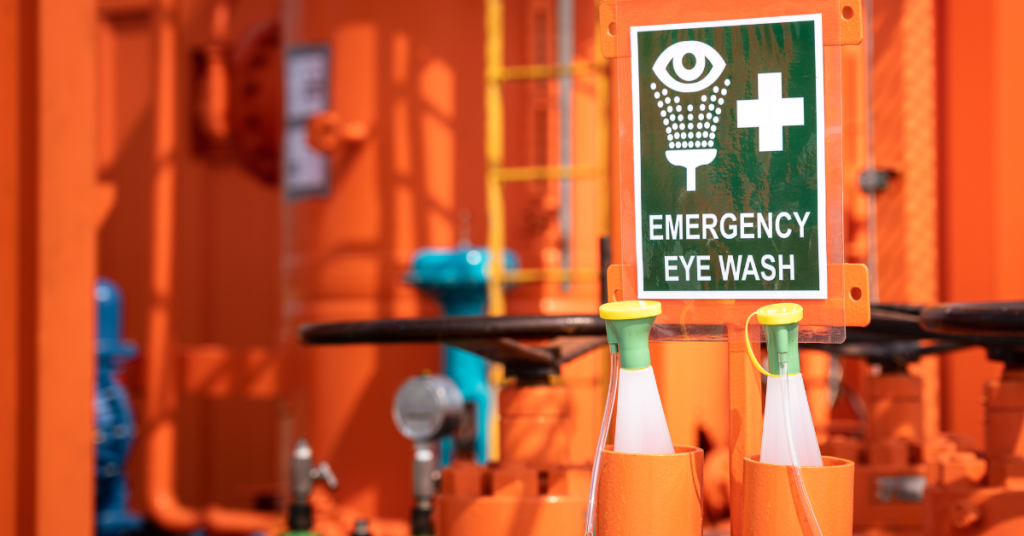
Why quick rinsing matters for the eyes
The eye is delicate and reacts badly to harsh substances. A strong acid or alkali can start burning the surface in seconds, and alkalis are the worst because they keep eating inward long after the splash. The only way to limit the harm is to wash the substance out fast and keep washing for a good while, often a full fifteen minutes.
That length of time is the part many people get wrong. A quick three-second rinse under a tap barely touches the problem. Proper flushing needs a gentle, steady flow that the person can stand at without holding anything, because both hands are often needed to hold the eyelids open. A purpose-built unit delivers that hands-free flow at the right rate, soft enough not to hurt the eye yet strong enough to clear it out.
Speed and duration together do the real work. Getting to water within ten seconds and rinsing for the full count gives the eye its best chance. Everything about how these units are chosen and placed comes back to that simple goal: water on the eye, fast, for long enough.
The main types of eye wash gear
There is more than one kind of unit, and the right pick depends on the site. A plumbed Eye Wash Station connects straight to the mains water supply and gives an endless flow, which suits a fixed workshop or lab where the water lines already run nearby. Once fitted, it costs little to run and is always topped up.
Gravity-fed or portable units carry their own tank of water or saline and need no plumbing at all. They shine in spots where pipes do not reach: outdoor yards, remote plants, mobile rigs or a temporary work area. The trade-off is upkeep, since the tank holds a limited amount and the fluid inside has to be changed on a set schedule to stay clean.
For a fast first response there are also personal eye wash bottles. These small squeeze bottles of saline let a worker start rinsing on the spot while heading toward a full unit. They are a useful bridge, not a replacement, because they hold far too little water to manage the full rinse on their own. Many sites keep bottles at the bench and a larger fixed unit close by.
Placing and plumbing the units
A rinsing point is only any good if a half-blinded person can reach it without help. The common rule of thumb is that a unit should sit within ten seconds of travel, roughly fifteen to twenty metres, from any spot where eyes are at risk. The path to it must be clear, level and free of doors that need a code or a hard pull, since someone who cannot see well will struggle with obstacles.
Height and visibility count too. Mount the unit so the bowls sit at a comfortable level for most people, and mark it with a bright, standard safety sign that stands out even in a dim or smoky room. Some sites add a flashing light or alarm that trips when the unit is switched on, so others know help is needed and can come running.
Water temperature is an easy thing to overlook. Water that is icy or scalding makes a person pull away long before the fifteen minutes are up, which cuts the rinse short. Tepid water, somewhere around room warmth, lets the casualty hold steady for the full time. In cold spots, a small in-line heater or a blended supply keeps the flow comfortable year round.
Keeping water clean and units ready
A rinsing unit that nobody checks can quietly turn into a hazard of its own. Standing water in pipes or tanks can grow bacteria, and the last thing an injured eye needs is dirty water. Plumbed units should be run for a short burst every week to flush out stale water and to prove the valve still opens fast and stays open hands-free.
Portable and tank units need their fluid swapped on the maker’s schedule, which is often every three to six months, or sooner once a seal is broken. Write the change date on the tank and log each check so nothing slips. Keep spare cartridges or fluid on hand so a unit is never left empty while waiting on a delivery.
Train people as well as service the gear. Every worker should know where the nearest unit sits, how to switch it on, and that the rinse must carry on for the full time even when the urge is to stop early. A quick walk-through during induction, plus a refresher now and then, means nobody is reading instructions for the first time while their eye is stinging.
An eye wash station is a small fixture that protects one of the body’s most fragile parts. Choose the type that fits the site, place it where an injured person can reach it in seconds, keep the water clean and warm, and teach staff to use it without thinking. Get those basics right and a frightening splash becomes a manageable scare instead of a lasting injury, which is exactly what good safety planning is meant to deliver.