Umhlanga has gone from a quiet beachside suburb to one of the most sought-after property areas in KwaZulu-Natal. Over the past 15 years, the stretch between Umhlanga Ridge, Umhlanga Rocks, and the newer Izinga and Sibaya precincts has been transformed by commercial development, residential estates, and infrastructure upgrades. The result is an area that offers city-level convenience with a coastal lifestyle attached.
Demand for apartments in Umhlanga has been growing every year. Young professionals working at the corporate offices along Umhlanga Ridge, couples looking for a lock-up-and-go lifestyle, and retirees downsizing from large family homes are all competing for the same stock. That consistent demand is what keeps property values in the area strong, even during periods when the broader South African market slows down.
The area sits along the M4 highway with direct access to King Shaka International Airport, the N2, and the Durban CBD. The commute to central Durban takes about 20 minutes outside of peak traffic. For anyone working on the north coast or in the Umhlanga commercial district itself, the commute is almost non-existent.
What Makes Umhlanga Different
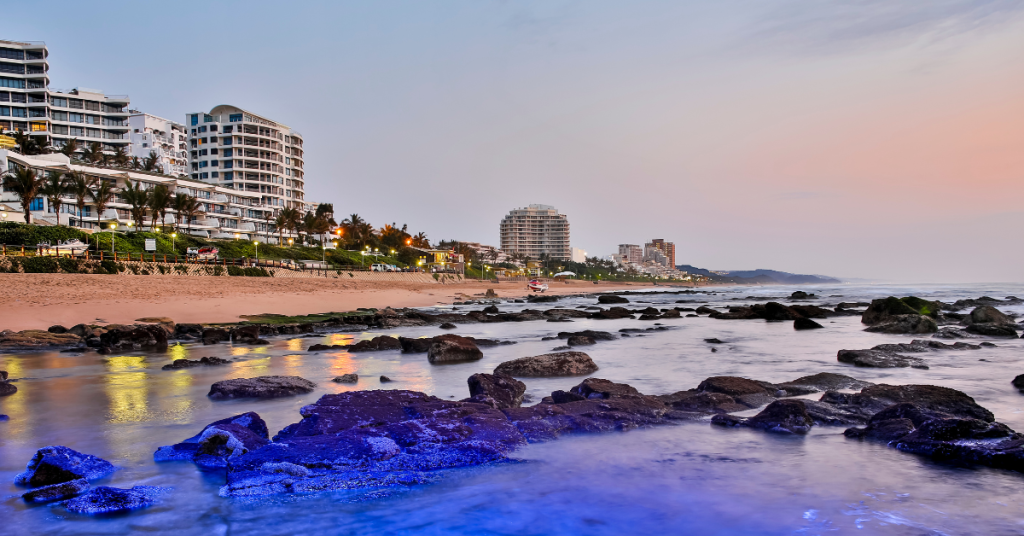
Umhlanga has something that most inland suburbs do not: the ocean. That sounds obvious, but the effect on property values is real. Coastal properties in South Africa consistently outperform equivalent inland properties over the long term. Buyers pay a premium for ocean views and walkable beaches, and that premium tends to hold even when the rest of the market dips.
The commercial side of Umhlanga has grown rapidly. Gateway Theatre of Shopping is one of the largest malls in the southern hemisphere, and it sits right in the middle of the area. The Cornubia industrial and commercial hub is a short drive away. Office parks along Umhlanga Ridge house major corporates, law firms, and financial services companies, which creates a constant stream of housing demand from employees who want to live close to work.
Restaurants, cafes, and bars along the beachfront promenade and in the Lighthouse Mall precinct give the area a social energy that is hard to match. On any given weekend, the promenade is packed with runners, families, dog walkers, and people just enjoying the weather. It is that combination of work, play, and coastal living that makes the area so sticky once people move there.
The Property Market Right Now
A search for property for sale Umhlanga turns up a wide range of options. Studio and one-bedroom apartments start from around R900,000 in some of the newer complexes. Two-bedroom units in established buildings along the beachfront or near the Ridge typically sit between R1.5 million and R3.5 million. Penthouse units and larger three-bedroom apartments in premium positions can push well past R5 million.
Umhlanga property has shown steady appreciation over the past decade. The influx of commercial investment has propped up demand from the buy side, and the limited land available for new development in older parts of the suburb has kept supply tight. That supply-demand imbalance is a big part of why prices have held up better here than in many other parts of KZN.
Newer precincts like Izinga and Sibaya are where a lot of the growth is happening right now. These areas still have land available for development, and the estates being built there tend to be modern, secure, and designed around lifestyle amenities. Prices in these newer areas are generally lower than in the established beachfront strips, which makes them attractive entry points for first-time buyers and investors.
Why Apartments Are the Fastest-Growing Segment
Umhlanga apartments account for a growing share of all property transactions in the area. The numbers tell the story. Sectional title sales in the greater Umhlanga area have increased year on year for the past five years, and the average time a unit spends on the market before being sold has been getting shorter.
Part of this is driven by security. Living in a complex with controlled access, CCTV, electric fencing, and on-site security gives people peace of mind that a standalone house often does not. For people who travel for work or spend weekends away, knowing that their home is secure makes apartment living a no-brainer.
The other part is pure economics. Buying a freestanding home in Umhlanga Rocks or La Lucia is out of reach for most individual buyers. An apartment in a well-managed complex in the same area costs a fraction of the price and still gives you access to the same beaches, restaurants, and shops. The trade-off is space, and for a lot of buyers, that trade-off is worth making.
Rental demand backs this up. Furnished apartments near the beachfront or the Gateway precinct can fetch R12,000 to R18,000 per month for a two-bedroom unit. Short-term holiday rentals during peak season (December and Easter) can pull in even more. Investors who buy in the right complex and manage the unit well are seeing solid returns.
Things to Check Before You Buy
Body corporate health is the number one thing to look at. Ask for the latest financial statements, the reserve fund balance, and any planned or recent special levies. A complex with a thin reserve fund is a risk. One major repair bill, like waterproofing or lift replacement, can result in a special levy that costs each owner thousands of rands.
Check the rules on short-term rentals. Some complexes in Umhlanga have banned Airbnb-style letting. If rental income is part of your investment plan, make sure the body corporate allows it before you sign anything.
Look at the parking situation. Covered parking bays are limited in some of the older buildings, and a unit without parking is harder to sell or rent down the line. In newer complexes, parking is usually included in the purchase price, but it is still worth confirming.
Visit the area at different times. Umhlanga gets busy during holidays, and some streets around the beachfront and Gateway can be congested. If you are buying to live there full-time, get a feel for what the traffic and noise levels are like during ordinary weekdays as well.
Looking Ahead
Umhlanga is not showing any signs of slowing down. The commercial hub continues to attract corporate tenants, the airport link keeps improving accessibility, and the new residential developments in Izinga and Sibaya are bringing fresh stock to the market at a range of price points.
For buyers who want a coastal lifestyle without giving up the convenience of a city, Umhlanga sits in a sweet spot. The property market there is mature enough to be stable but still has room to grow, particularly in the newer precincts. Whether the goal is a first home, a holiday apartment, or an investment property, the area has options that are hard to find anywhere else in KZN.