Botswana is one of the most rewarding safari destinations on the African continent. It has massive wilderness areas, low tourist numbers compared to neighbouring countries, and a government that has prioritised conservation over mass tourism for decades. The result is a country where wildlife roams across huge tracts of unfenced land, and the experience of being in the bush feels raw and genuine.
A Botswana African safari offers something that is getting harder to find in other parts of the continent. There are no crowds of vehicles circling a single lion sighting. There are no paved roads cutting through the reserves. What you get instead is open land, big skies, and animals behaving naturally with very little human interference. That kind of experience is increasingly rare, and it is one of the main reasons Botswana keeps drawing repeat visitors.
The country covers roughly 581,730 square kilometres, and close to 40% of that land is set aside for national parks, game reserves, and wildlife management areas. The Okavango Delta, Chobe National Park, the Makgadikgadi Pans, and the Tuli Block in the east are just a few of the well-known areas. Each one has a different character, different terrain, and different wildlife concentrations depending on the time of year.
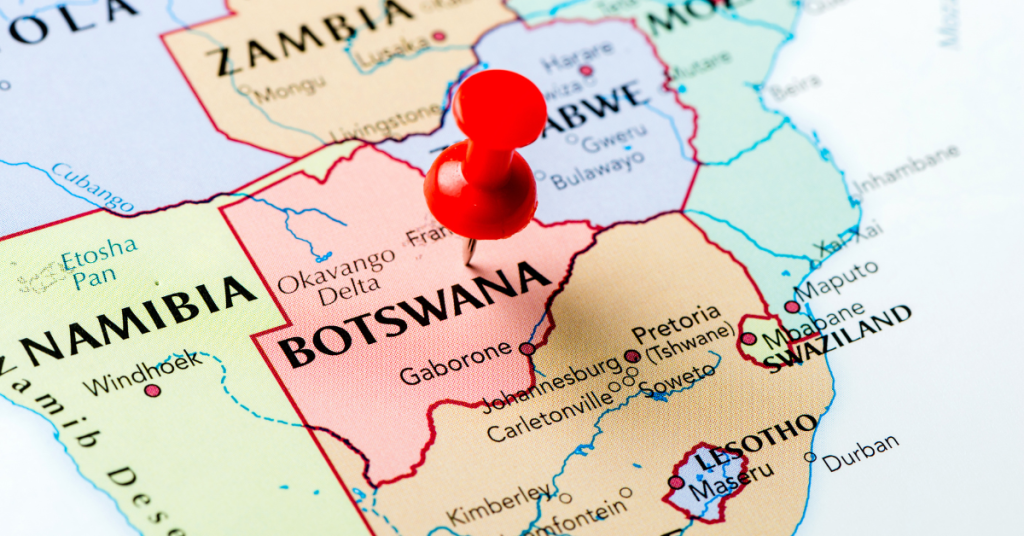
What Makes the Wildlife So Special
Botswana is home to one of the largest elephant populations in Africa, estimated at around 130,000. Chobe alone accounts for a huge number of these. Watching a herd of 50 or 60 elephants cross a river at dusk is the kind of thing that stays with people long after they return home.
The predator populations are strong too. Lion, leopard, cheetah, wild dog, and hyena are all present in good numbers across the major reserves. The wild dog population in the northern Tuli region is particularly notable. These animals are among the most endangered predators in Africa, and Botswana is one of the few places where they are regularly seen.
Birding on a Botswana safari is exceptional. The Okavango Delta alone supports over 400 bird species, including African fish eagles, saddle-billed storks, Pel’s fishing owls, and carmine bee-eaters. Even travellers who do not consider themselves birdwatchers tend to be impressed by the sheer variety and colour of the species they encounter.
Choosing Where to Stay
Accommodation in the bush ranges from simple tented camps to high-end lodges with private plunge pools and personal chefs. A Botswana safari lodge will typically offer twice-daily game drives, meals, drinks, and sometimes walking safaris or boat cruises depending on the location. The standard of hospitality is generally very high, and many of the lodge teams have been working in the industry for years.
Botswana lodges in the Okavango Delta tend to be accessible only by light aircraft or boat, which adds to the sense of remoteness. In other parts of the country, like the Tuli Block or the Central Kalahari, lodges can be reached by road. The type of access often affects the price, with fly-in lodges typically costing more than those on road-accessible reserves.
When picking a place to stay, it helps to think about what kind of experience matters most. If seeing big herds of elephants and buffalo is the priority, Chobe and the Linyanti are hard to beat. If the goal is to see predators in a quieter, less-visited area, the Tuli Block and the Makgadikgadi region are strong choices. For a water-based experience with mokoro canoe trips and birdlife, the Delta is the obvious pick.
Group size at the lodge matters too. Some properties take only 12 to 16 guests at a time, which means game drive vehicles are never full and the atmosphere at meals and around the campfire is relaxed. Others can accommodate 30 or more guests. There is nothing wrong with either setup, but the smaller camps tend to feel more personal.
Planning the Trip
Botswana safari tours are typically sold as all-inclusive packages that cover accommodation, meals, game activities, park fees, and internal transfers. Pricing varies widely depending on the region, the level of luxury, and the time of year. The green season (November to March) is the most affordable period, and it comes with the added benefit of lush vegetation, newborn animals, and spectacular thunderstorms.
The peak dry season runs from June to October. This is when water sources shrink and animals gather around the remaining rivers and waterholes, making them easier to spot. It is the busiest time of year, so booking several months in advance is a good idea. Many lodges are fully booked six to eight months ahead for the July to September window.
Botswana tours and safaris often combine two or three different areas in a single trip. A common itinerary would be three nights in the Okavango Delta, two nights in Chobe, and two nights in the Makgadikgadi. This kind of multi-stop route gives a rounded picture of the country and exposes travellers to different habitats and species along the way.
Flights between camps are usually on small bush planes carrying six to twelve passengers. The views from these flights are worth the trip on their own. Flying over the Okavango Delta, you can see the patterns of water channels, islands, and animal trails from above. It is a perspective that puts the sheer size of the wilderness into context.
Getting There
Most international visitors fly into Maun or Kasane. Maun is the gateway to the Okavango Delta and the Central Kalahari, and it is well connected to Johannesburg with multiple daily flights. Kasane serves the Chobe region and is a short drive from Victoria Falls in neighbouring Zimbabwe, which makes it easy to combine a safari with a visit to the Falls.
Visa requirements depend on nationality. Citizens of most European countries, the United States, Canada, and Australia do not need a visa for stays under 90 days. South African passport holders can enter without a visa as well. It is worth double-checking the latest entry requirements before travelling, as rules can change without much notice.
What to Pack
Neutral-coloured clothing works best on safari. Khaki, olive, brown, and beige blend into the bush and do not attract insects the way dark colours do. A warm fleece or jacket is a must for early morning and evening game drives, even in summer. Temperatures can drop sharply once the sun is down.
Good binoculars make a big difference. A pair with 8x or 10x magnification is ideal. Camera gear is a personal choice, but a lens in the 100-400mm range covers most situations. Do not forget spare batteries and memory cards. Charging facilities at remote lodges can be limited, and there is nothing worse than a flat battery when a leopard walks past the vehicle.
Sun protection is non-negotiable. A wide-brimmed hat, high-SPF sunscreen, and quality sunglasses should be at the top of the packing list. Insect repellent with DEET is recommended for the Delta and Chobe areas, where mosquitoes are active around dusk.
Why People Come Back
Ask anyone who has been to Botswana whether they would go again, and the answer is almost always yes. The country has a way of getting under your skin. It is not just about the animals, though they are extraordinary. It is the silence at night, the smell of rain on dry earth, the way the light changes across the floodplains in the late afternoon.
Repeat visitors often say that every trip feels different. The seasons change the look of the land completely. An area that was bone-dry and dusty in September can be flooded and green by January. The wildlife moves with the water and the grazing, so the sightings are never the same twice.
Botswana has set a high bar for responsible tourism. The low-volume, high-value model keeps visitor numbers manageable and puts money back into conservation and local communities. It is a system that works, and it shows in the quality of the experience on the ground. For anyone serious about seeing Africa at its best, Botswana is difficult to overlook.