Construction projects in Gauteng move fast, and delays caused by having the wrong machine on site are entirely avoidable. The problem is that most project managers and site owners are not machine specialists. They know they need plant, but they are not always sure which plant, and they do not always know the questions to ask when arranging plant hire.
This guide goes deeper than the general overview. It covers specific machines, what they actually do on a construction site, when one is the right choice over another, and where the common planning mistakes happen.
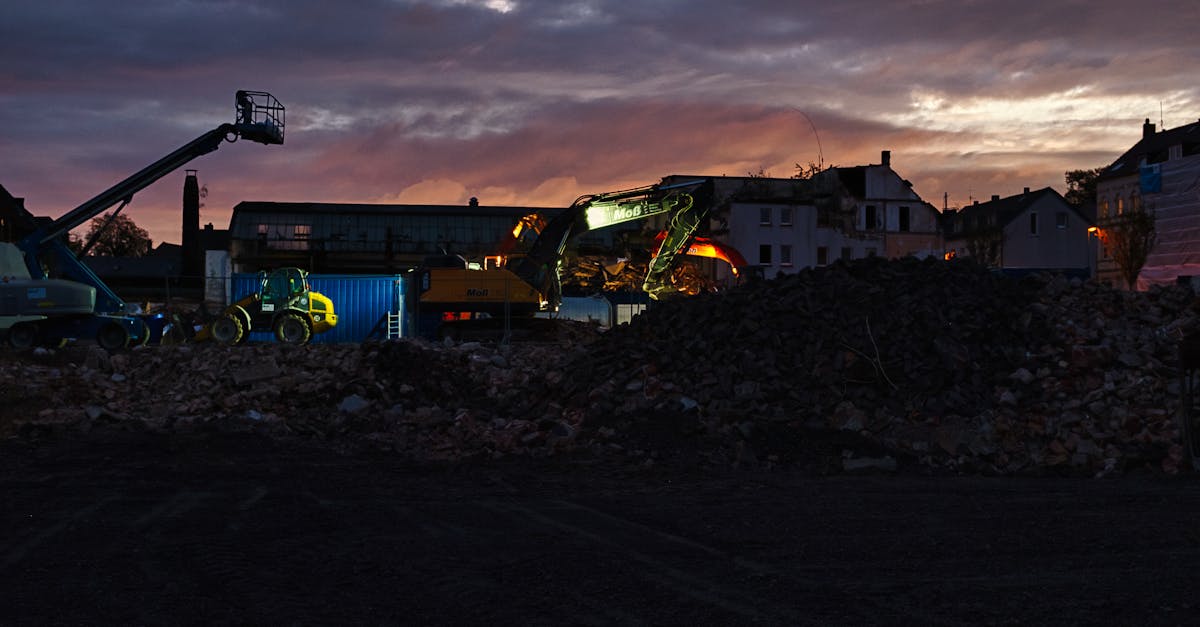
Bobcat vs Excavator: Knowing When to Use Which
This is one of the most common confusion points on smaller sites. Both machines dig and move material, but they are suited to very different tasks.
A bobcat (also called a skid steer loader) is a compact, highly manoeuvrable machine. It moves on a zero-turn radius, which means it can spin in its own footprint. That makes it useful in tight spaces like enclosed yards, narrow trenches between structures, or inside a building during strip-out work. Bobcats are also fast on flat surfaces and efficient at pushing and loading loose material into trucks when the haul distance is short.
However, a bobcat has limited breakout force. It can scratch at soft ground and push loose material, but it cannot break hard ground or dig a proper trench on its own in anything other than soft soil. If you need depth or you are working in compacted or rocky material, a bobcat is the wrong tool.
An excavator is the right machine for actual digging. It can reach deep, generate the force to cut through compacted soil or weathered rock, and swing its arm to load trucks efficiently without needing to reposition constantly. Excavators come in a wide range of sizes, from compact 1-tonne machines that fit through a standard gate to 30-tonne machines designed for heavy bulk work.
Bobcat hire makes sense for site clean-up, loading operations, light demolition debris handling, and confined area work. Excavator hire makes sense for trenching, bulk excavation, and any task that requires real digging force. Using one in place of the other usually means slower progress and higher hourly cost for the output you get.
What Crane Hire Actually Covers
Crane hire is one of the most misunderstood categories in construction plant. Many clients assume they are hiring a crane and an operator, and that everything else is sorted. There is more to it than that.
A crane lifts things. That sounds simple, but the variables that affect what a crane can safely lift are significant: the weight of the load, the radius from the crane centre to the load, the ground conditions under the outriggers, the presence of overhead obstacles, and the rigging method all affect safe working load. Every crane has a load chart that specifies what it can lift at different radii, and operating outside that chart is dangerous and illegal.
Crane hire typically includes the machine and an operator. What it does not automatically include is a banks man (the person on the ground guiding the lift), rigging equipment, or a lift plan. On most professional sites, a lift plan is required for any lift over a certain weight threshold. That plan must be prepared by a competent person, not improvised on the morning of the lift.
Truck and crane hire together is common for deliveries that involve placing heavy materials at height or in positions a truck cannot reach by itself. Steel structures, precast concrete elements, and heavy mechanical equipment all commonly require this combination. When booking, be clear about the load weight, the lift radius needed, and any overhead obstructions, because these determine whether a mobile crane or a larger crane is required.
Tipper Trucks: Why They Are Often the Bottleneck
On excavation projects, the tipper truck fleet is frequently the limiting factor on daily output, and it is often underestimated at the planning stage.
An excavator can load a truck in a few minutes. If there are not enough trucks to keep the excavator continuously fed, the excavator sits idle waiting for a truck to return from the tip. That idle time is expensive, because the excavator is on a day or hourly rate regardless of how much it moves.
The calculation to avoid this is straightforward in principle: divide the round trip time for a truck (load, travel to tip, tip, return) by the cycle time of the excavator (time to fill one truck). The result tells you how many trucks you need to keep the excavator running without waiting.
On sites with long haul distances to a tip or disposal site, the truck count needed to sustain production is higher. On sites with short hauls, a smaller fleet works. Tipper truck hire should always be sized against the excavation rate, not just guessed at.
Plant hire companies that supply both excavators and tipper trucks together can usually help with this calculation, because they have an interest in making the combination productive. Where truck hire is sourced separately from excavator hire, the onus falls on the site manager to do the sums before the job starts.
Plant Hire in Johannesburg: Site Conditions to Know
Johannesburg’s geology is varied, and it affects machine selection in ways that catch unfamiliar contractors off guard.
The Witwatersrand ridge runs through the south of the city, and rock at shallow depth is a recurring feature on sites in areas like Johannesburg South, Soweto, and parts of the East Rand. Sites in these areas often need rock breakers (hydraulic hammers) fitted to excavators rather than standard digging buckets. Standard plant hire Johannesburg suppliers will have breaker attachments available, but they need to be specified upfront.
Northern Johannesburg and Sandton generally have deeper soils, but certain areas have encountered sinkholes due to dolomitic conditions. Dolomite sites require specific plant management and additional care around vibration, which affects compaction equipment selection.
Access and logistics in Johannesburg are also worth planning. Many sites in the inner city or older suburbs have narrow street access that limits the size of plant that can get in and out. A 30-tonne articulated dump truck that works well on an open mine site may not fit the access roads on a Rosebank infill development.
Plant Hire in Pretoria: What Differs
Pretoria’s construction market is heavily influenced by government and infrastructure projects, and sites in and around the CBD, Centurion, and the East tend to have well-organised plant logistics as a result. However, the soils north and east of the city can include significant clay content, which creates the challenges covered earlier in this guide around wet conditions and swell factors.
Plant hire Pretoria suppliers are well-stocked for infrastructure-scale work, and the availability of larger machine classes tends to be better in Pretoria than in some outer areas. For smaller commercial or residential projects, it is worth confirming machine availability and lead times, especially during the year-end push when construction activity peaks.
Choosing Between Different Excavator Sizes
Not all excavators are the same, and size selection matters for both cost and productivity.
A 1-3 tonne mini excavator is suited to drainage work in confined spaces, domestic foundations, and work inside or close to existing structures. It causes minimal surface damage and can be transported on a light trailer.
A 5-8 tonne excavator is the most common size for commercial groundworks, utility trenching, and medium-scale site preparation. It offers a good balance of reach, power, and manoeuvrability without needing a heavy transport vehicle.
A 14-20 tonne machine steps up into serious bulk excavation territory. These machines load tipper trucks efficiently and are suited to cut-and-fill operations, large slab preparations, and basement excavations.
Machines above 20 tonnes are typically used for mining, major infrastructure, and heavy earthworks. They require wider access and more site space to operate effectively.
Plant hire near me searches often return a mix of suppliers with different machine availability. Knowing which size class you need before making contact saves time in the enquiry process and avoids being talked into a machine that is too large (expensive per hour) or too small (slow output).
Matching Machine to Ground Conditions
Ground conditions affect not just whether a machine can do a job but how quickly and at what cost.
In soft, free-draining sandy soils, a standard digging bucket is fine and machine productivity will be high. In stiff clay, a narrower bucket with a sharpened cutting edge is more efficient and reduces the force required to penetrate the material. In weathered rock, a rock bucket with hardened teeth is needed. In hard rock, a hydraulic breaker replaces the bucket entirely for breaking, after which an excavator with a rock bucket cleans up.
Wet and muddy sites require machines with wide rubber tracks or steel tracks, depending on how soft the ground is. A machine with narrow tracks will sink or get stuck on a waterlogged site. This is not a hypothetical: machines bogging on wet sites causes damage, delays, and recovery costs.
Discussing ground conditions with a plant hire supplier before the job starts allows them to spec the machine correctly, including the right bucket or attachment and the right undercarriage configuration. That conversation takes five minutes and can prevent a day of lost production.
A Simple Pre-Hire Checklist
Before placing a plant hire order for any construction project in Johannesburg or Pretoria, work through these points:
– What is the task: digging, loading, lifting, hauling, or compacting? – What are the ground conditions: soft, stiff, clay, rock, wet? – What is the access like: wide open, tight, restricted height? – What are the haul distances if tipper trucks are involved? – What attachments are needed: standard bucket, rock bucket, breaker, auger? – How long is the hire period, and is standby rate or off-hire procedure clear? – Is a lift plan required for any crane lifts?
Getting these answers sorted before contacting suppliers leads to more accurate quotes, faster mobilisation, and fewer surprises once the machines arrive on site.
Plant hire decisions are mostly practical ones. Match the machine to the task, understand the site conditions, and size the support fleet correctly, and most projects run without major plant-related delays.