When people renovate or build a home, most of the attention goes to the big decisions: paint colours, flooring, kitchen layouts, and bathroom tiles. The smaller fittings and fixtures tend to get chosen quickly at the end of the project when budget and energy are both running low. That’s a mistake, and most homeowners only realise it once they’re living in the space and reaching for a handle or flipping a light switch a hundred times a day.
The fittings you interact with constantly are the ones that shape how a home feels to live in. Getting them right doesn’t have to be complicated or expensive, but it does require a bit of thought.
Door Hardware: More Than Just Functional
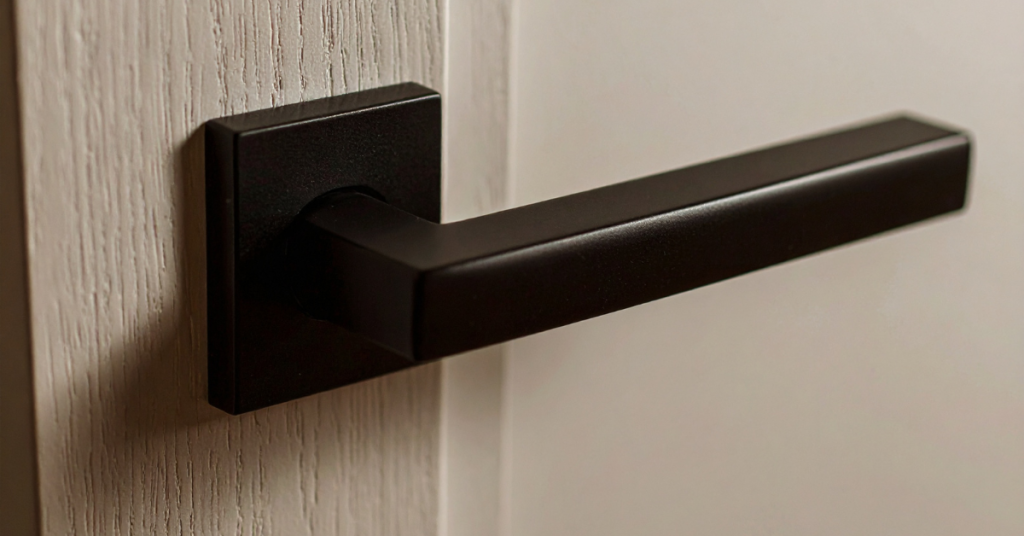
Door handles are one of the most touched surfaces in any home. They’re also one of the first things a visitor notices. A handle that feels solid and well-made communicates quality in a way that’s hard to define but easy to sense. One that feels flimsy or wobbles slightly does the opposite.
The finish matters as much as the shape. Brushed nickel, matte black, polished chrome, and antique brass all create very different feelings in a room. Matte black has been particularly popular over the past few years for its ability to work across both modern and more traditional interiors. Brushed nickel is a classic choice that suits most colour schemes without competing with other elements in the room.
Beyond aesthetics, handles need to suit the way the door is used. A passage door in a busy household sees a lot more action than a cupboard door in a guest room. For high-traffic doors, a handle with a solid internal mechanism and a good quality return spring will outlast a cheaper option significantly.
Door hinges are one of those items that most people never think about until they start squeaking or a door begins to sag. Using quality hinges from the start prevents both of those problems. For heavier doors, particularly solid wood doors, the hinge needs to be rated for that weight. Under-spec hinges on a heavy door will fail prematurely, and the door will start to drop at the latch side, which causes wear on the door frame and eventually makes the door difficult to close properly.
Security Fittings That Actually Do Their Job
Door locks have moved well past the basic options that were standard a decade ago. Mortice locks, deadbolts, and multipoint locking systems all offer different levels of security, and choosing the right one depends on where the door is, how much foot traffic it handles, and the security requirements of the property.
For external doors, locks should always be specified with security in mind first and aesthetics second. A beautiful lock that can be bypassed easily isn’t doing its job. Look for options with anti-pick, anti-drill, and anti-bump ratings. These are meaningful indicators of how resistant the mechanism is to common forced entry techniques.
For internal doors, the security requirement is lower but privacy still matters. Bathroom and bedroom locks should be straightforward to operate from the inside and openable in an emergency from the outside, which is a feature that’s particularly important in homes with young children or elderly residents.
Preventing Unnecessary Damage
Door stops are one of the most underappreciated items in any fitting schedule. A door that swings fully open and hits a wall will eventually damage both the wall and the handle. In homes with plaster walls, the handle creates a hole that requires patching and repainting. In homes with wooden skirting or wooden panelling, the damage can be more significant.
A well-placed door stop costs very little and prevents that damage entirely. Floor-mounted stops, wall-mounted stops, and hinge-mounted stops are all available depending on the door configuration and where the swing takes the door.
Castor wheels fall into a similar category of practical fitting that makes daily life easier. On furniture that needs to be moved regularly, a good set of castors is far better for both the furniture and the floor than dragging the piece. Lockable castors are worth specifying for any furniture that needs to stay in place but occasionally be repositioned, such as a work trolley, a kitchen island on wheels, or storage units in a workshop or garage.
The Bathroom: Where Fittings Matter Most
The bathroom is the room where the quality of fittings is most immediately felt. People spend time in bathrooms every single day, and the combination of moisture, heat, cleaning chemicals, and constant use puts fittings under more stress than anywhere else in the home.
Bathroom accessories include everything from towel rails and robe hooks to toilet roll holders and soap dispensers. Buying these as a set in a matching finish creates a more cohesive look than piecing together items from different ranges. Even a modest bathroom feels more considered when all the accessories share the same finish and design language.
Bathroom vanities set the tone for the whole room. A well-chosen vanity provides storage, defines the layout, and works as the visual anchor of the space. Wall-hung vanities have become popular for their ability to make a room feel larger, since the floor continues uninterrupted beneath them. Freestanding vanities work better in larger bathrooms where the scale of the piece doesn’t overwhelm the space.
Bathroom basins come in a wide range of forms. Countertop basins, undermount basins, wall-hung basins, and inset basins all have different cleaning requirements and suit different vanity configurations. A countertop basin looks striking but requires wiping around the base regularly to prevent water damage to the vanity surface beneath it. An undermount or inset basin is easier to keep clean since there’s no rim sitting proud of the counter surface.
Mirror cabinets solve two problems at once. They provide the mirror that every bathroom needs and add concealed storage for the items that would otherwise clutter the vanity surface. In a smaller bathroom, a mirror cabinet can make a significant difference to how the space functions day to day.
Warmth and Comfort in the Bathroom
Heated towel rails are genuinely worth the investment in any bathroom that gets regular use. A warm towel after a shower is a small comfort that people notice every single morning. Beyond the comfort factor, heated rails dry towels between uses, which reduces the musty smell that builds up in towels that stay damp for extended periods.
Electric heated rails are straightforward to install in most bathrooms and don’t require any changes to the plumbing. Hydronic rails, which connect to the hot water system, are more efficient to run but require plumbing work during installation. For a renovation that’s already involving plumbing changes, a hydronic rail makes sense. For a straightforward bathroom refresh, an electric rail is the simpler option.
Choosing fittings with a bit of care, rather than grabbing whatever’s closest to the budget cutoff, makes a home feel more finished and more considered. These are the things people touch and interact with every day. They’re worth getting right.