Cape Town has a reputation built largely on two things: the mountain and the waterfront. Both are worth it. But most people who spend any real time in the city quickly work out that those two landmarks are just the starting point. The outdoor options here are varied, accessible, and genuinely good in a way that few other cities in the world can match.
What makes Cape Town particularly well set up for outdoor activity is the proximity of everything. You can be in the ocean, on a mountain, or paddling along a coastline all within the same day without travelling far. For people who live here, that access becomes part of daily life. For visitors, it is often the part of the trip they remember most clearly long after the restaurant meals and museum visits have faded.
The Water Side of Things
The Cape Peninsula is surrounded by two very different bodies of water. The Atlantic on the west side is cold, clear, and dramatic. False Bay on the east side is warmer, calmer in certain conditions, and has its own character entirely. Both coastlines offer access to the water in different ways, and both reward people who make the effort to get onto or into them.
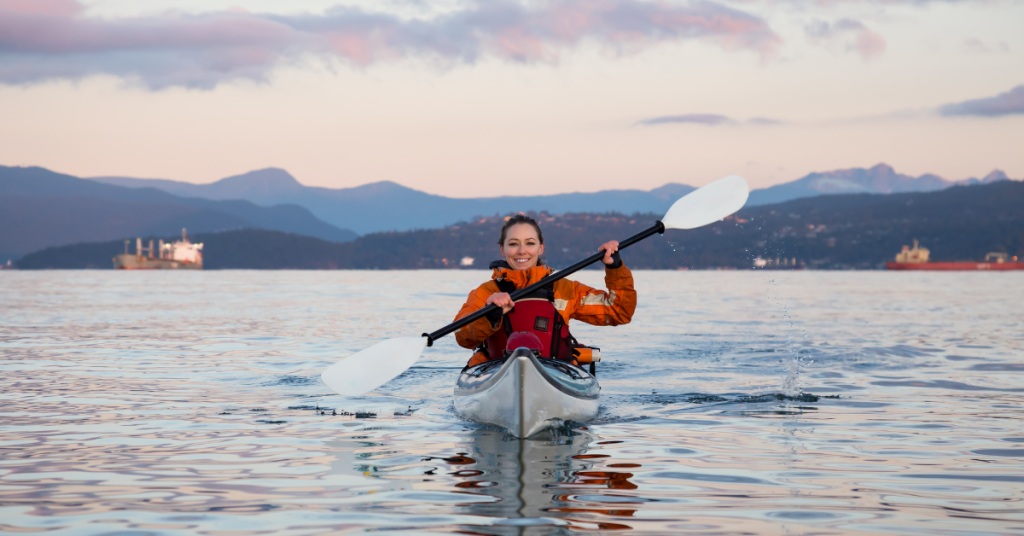
Kayaking in Cape Town is one of the best ways to see the city from a perspective that most people never get. Sitting low on the water with the mountain rising behind you and the Atlantic in front gives you a view of Cape Town that no restaurant deck or cable car can replicate. The scale of the coastline becomes clear when you are level with it rather than looking down from above.
The conditions on the Atlantic side vary significantly depending on the time of year and the time of day. The South Easter, Cape Town’s famous summer wind, can come up quickly and make paddling considerably more difficult than it looked from the shore. Mornings are generally calmer, particularly in summer, and the most reliable window for flat water is before the wind picks up in the late morning. Joining a guided session rather than renting and going alone is the sensible choice for anyone who does not have prior experience reading coastal conditions.
Cape Town kayak tours typically launch from the Atlantic Seaboard and cover sections of coastline that include sea caves, rock formations, and in the right season, African penguins and Cape fur seals. The seal colonies in particular are a draw. Getting within a few metres of seals that are entirely unbothered by your presence is a different experience from watching them from a harbour wall.
The guided format is worth it for more than just safety. A guide who knows the coastline can point out things you would miss on your own, manage the group through tricky sections, and time the trip to take advantage of the best conditions. For visitors who have limited time and want to make the most of it, that local knowledge is genuinely valuable.
Getting on the Mountain
Table Mountain is one of the most accessible major mountain environments in the world. The cable car means the summit is within reach of anyone who wants to stand on top of it without climbing. But the mountain is also a serious hiking environment with trails ranging from short walks on the lower slopes to full-day routes that cross the plateau, descend into ravines, and take in sections of the coastline as well.
Hiking tours in Cape Town offer access to routes and parts of the mountain that most people on their own never find. The Table Mountain National Park covers a vast area that includes the Boulders penguin colony near Simon’s Town, the Cape Point lighthouse at the southern tip of the peninsula, and dozens of trails that connect the various sections of the park. Navigating this without a guide is possible but takes considerable research and prior experience.
The Skeleton Gorge route from Kirstenbosch is one of the classic Table Mountain hikes. It starts in the Botanical Garden, climbs through indigenous forest, follows a stream up through the gorge, and emerges on the plateau with views across both sides of the peninsula. It is not a gentle walk. There is scrambling involved and some sections require using chains and ladders. It is entirely manageable for people in reasonable physical condition who are comfortable with uneven terrain and some exposure to heights, but it is not suitable for young children or people who are not confident on technical ground.
Lion’s Head is a different kind of hike. The route circles the peak before ascending steeply to the summit via a series of ladders and chains on the upper section. The 360-degree view from the top on a clear day takes in the Atlantic, False Bay, the Cape Flats, and the full length of Table Mountain. It is one of the most rewarding short hikes in the country and completely doable in a morning for anyone with a reasonable level of fitness.
The full day Cape Point route is a longer commitment but one of the most impressive hikes on the peninsula. The path follows the western coastline of the Cape Point section of the national park, passing through fynbos, along cliff edges above the Atlantic, and eventually reaching the old lighthouse at the most south-western point of the peninsula. Baboons are a fixture on this route and need to be treated with respect. Do not feed them, do not run from them, and keep food out of sight.
Practical Things Worth Knowing
Cape Town’s weather changes fast. What starts as a clear, still morning can turn into a cold, windy afternoon in under an hour. Layering is the only sensible approach. A light windproof jacket takes up almost no space and makes a significant difference when the South Easter arrives or when you gain altitude on the mountain and the temperature drops.
Sun protection matters more than most visitors expect. The UV index in Cape Town, particularly in summer, is high. A hat, sunscreen, and sunglasses are not optional for a full day outside. The combination of sun reflection off the water and direct exposure on an open mountain trail adds up faster than it does at lower latitudes.
Water is the other thing people underestimate. For kayaking, dehydration is less obvious than on a hike because you are not sweating visibly in the way you would be on land, but the sun and physical effort still drain your fluids. Bring more water than you think you need regardless of the activity.
Timing matters for both activities. For kayaking, early morning is almost always better than afternoon. For hiking on Table Mountain, starting early has the same logic plus the added benefit of avoiding the worst of the tourist congestion on popular trails. Reaching the summit of Lion’s Head at sunrise rather than mid-morning is a completely different experience in terms of both the conditions and the atmosphere.
Footwear is the final practical note. Trail shoes or hiking boots with proper grip are worth having for any of the mountain routes. Road running shoes or fashion trainers work in dry conditions on well-maintained paths but become a liability on wet rock or loose ground. Good grip underfoot is the difference between a confident hike and a stressful one.
Cape Town rewards people who get outside and do things rather than only looking at the city from a distance. The mountain and the coastline are not decorations. They are functional, accessible, and genuinely worth the effort it takes to engage with them properly.