Diamonds don’t lose their sparkle after someone else has worn them. A diamond that was mined, cut, and set into a ring forty years ago still has the same fire and brilliance it had the day it was made. That’s the thing about diamonds — they don’t age the way other materials do. They hold up, and they hold their value.
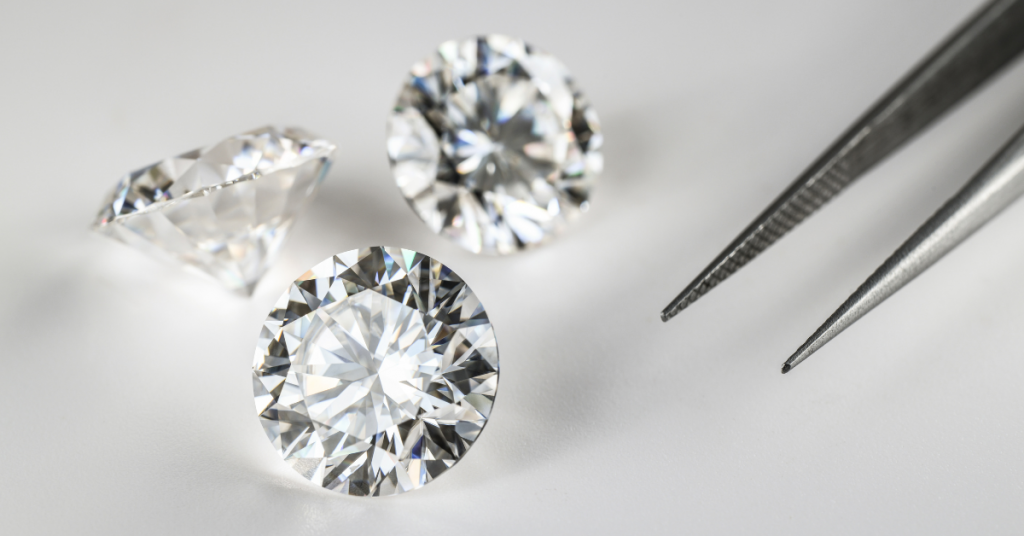
Yet a lot of buyers still skip over second-hand diamond pieces and head straight for the new arrivals counter. That’s a mistake. The pre-owned diamond market is full of stunning pieces, often at prices that would be impossible to match with newly manufactured Jewelry. And the quality? It’s frequently better than what’s sitting under glass at mainstream retailers.
What Estate Diamond Pieces Actually Are
Estate Diamond Jewelry is a broad term that covers any diamond Jewelry that was previously owned. The piece might have been part of a family collection, passed down through generations, or sold privately after a change in circumstances. The word “estate” has nothing to do with how old the piece is. A ring bought five years ago and resold counts just as much as one from the 1940s.
What makes estate diamond pieces stand out is the sheer variety. There are solitaire pendants, cluster rings, tennis bracelets, drop earrings, and brooches — all set with real diamonds and crafted in gold, platinum, or silver. Many of these designs are no longer in production, which means buyers get access to looks that simply aren’t available from modern collections.
The craftsmanship on older pieces tends to be different too. Before computer-aided design and mass manufacturing took over, jewellers worked by hand. Settings were built individually, and stones were placed with care. That handmade quality gives estate pieces a feel and finish that’s hard to replicate at scale.
Saving Money Without Losing Quality
The biggest draw of pre-owned diamond jewelry is the price. Diamonds don’t depreciate in the way electronics or cars do. The stone in a second-hand ring is chemically and physically identical to a brand-new one. The only difference is that it has a history — and that history works in the buyer’s favour when it comes to pricing.
Most pre-owned diamond pieces sell for 30% to 60% less than their new equivalents. That’s not a small saving. On a diamond tennis bracelet that retails for $5,000 new, a buyer could save $1,500 to $3,000 just by choosing a previously owned version in the same condition.
That extra money can go a long way. Some buyers use the savings to trade up — getting a larger stone or a higher-grade diamond than they could have afforded at full retail. Others simply pocket the difference. Either way, the value proposition is hard to ignore.
And it’s not just about the diamonds themselves. The gold and platinum in older pieces is often of a higher purity than what’s used in some entry-range modern Jewelry. An 18-karat gold setting from the 1960s contains the same amount of gold it always did. Precious metals don’t wear out — they just need a good polish.
Why Vintage Diamonds Have a Different Look
Older diamonds were cut differently. Before modern cutting technology came along, stones were shaped by hand using techniques that prioritised different things. An Old European cut diamond, for example, has a smaller table and larger facets than a modern brilliant cut. It throws light in bigger, chunkier flashes rather than the fast sparkle most people associate with new diamonds.
Vintage Diamond Jewelry from the early and mid-twentieth century often features these older cutting styles, and they’ve become hugely popular with collectors and buyers who want something that doesn’t look like everything else on the market.
Rose cuts are another example. These have a flat bottom and a domed top covered in triangular facets. They were common in Georgian and Victorian Jewelry and have made a strong comeback in recent years. A rose-cut diamond catches light differently from a modern stone — it’s subtler, softer, and has a glow rather than a flash.
Then there are mine-cut diamonds, named after the early diamond mines in Brazil and India. These stones are slightly irregular compared to modern cuts, and that’s part of their charm. No two mine-cut diamonds look exactly the same, which gives every piece a character of its own.
Checking Quality Before Buying
Buying second-hand diamond Jewelry doesn’t mean taking chances. A few simple checks go a long way toward making a smart purchase.
Start with the diamond itself. Ask about the four Cs — cut, colour, clarity, and carat. If the piece comes with a grading report from a recognised lab like GIA, that’s a strong indicator of quality. If there’s no paperwork, the diamond can still be independently appraised.
Look at the setting closely. Are the prongs intact? Is the diamond sitting flush, or does it wobble? Small issues like a worn prong or a loose stone are easy fixes, but it’s good to know about them upfront so the cost of repair can be factored in.
Check the metal for hallmarks. A stamp reading “750” means 18-karat gold. “950” indicates platinum. “585” is 14-karat gold. These marks are usually found on the inside of a band or on the clasp of a bracelet. If there’s no hallmark, ask the seller for details about the metal content.
Condition matters too. Light surface scratches on gold are normal and can be buffed out during a routine polish. Deeper damage or dents in the metalwork may need more attention. With diamonds, look for chips on the edges — particularly on older stones with thinner girdles. A small chip doesn’t ruin a stone, but it should be reflected in the price.
A Market That Keeps Growing
The appetite for second-hand diamond Jewelry has grown steadily over the past decade. Part of that comes down to shifting attitudes around spending. Buyers are less interested in paying a premium just for the sake of having something new and more interested in getting the best possible piece for their budget.
There’s an environmental angle worth mentioning too. Every piece of diamond Jewelry that gets resold is one less that needs to be produced from scratch. Mining has a significant footprint — on land, water, and communities. Choosing a pre-owned piece sidesteps that entirely. The diamond already exists, the metal has already been refined, and the piece has already been crafted. It just needs a new owner.
For anyone shopping for diamond Jewelry — whether it’s a gift, a personal purchase, or a long-term investment — the second-hand market has more to offer than most people expect. The diamonds are real, the savings are real, and the pieces themselves often carry a story and a style that brand-new items can’t match.